Her Own Compass shares financial education and personal experience, not individualized financial, investment, or tax advice. Every situation is different, so please consult a qualified professional before making major money decisions.

The most realistic budgeting tips for single moms start with one idea: build your plan around your lowest-earning month, not your best, so you are never caught short. From there it is automating savings, protecting the big three expenses, and claiming every benefit you qualify for. Budgeting as a single mom is not about doing more with willpower. It is about a plan that expects real life, tight months, kid costs, and the surprise expense that always lands at the worst time.
The short version: Single moms budget best by planning from their lowest month, giving every dollar a job, automating a small savings transfer first, and building a $1,000 starter emergency fund. Protect housing, transportation, and food before anything else, claim every tax credit and benefit, and keep one small line for joy so the plan actually lasts.

Save this for later
You will want this again. Pin it to your planning board so it is one tap away when you need it.
Pin it for laterWhy is budgeting different for single moms?
Budgeting is different for single moms because one income carries every cost and every risk, with no partner to absorb a bad month. The math is tighter and the margin for error is smaller, so the plan has to be kinder and clearer. I have seen how thin that margin gets. For one single parent earning less than $20,000 a year, spending $80 on shared classroom supplies meant two weeks of spaghetti and peanut butter, when outfitting just their own kid would have cost $20. That is the real texture of single-mom money, and a good budget is built for exactly those moments. Start with our budgeting for beginners guide if you are brand new.
1. Budget from your lowest month, not your average
Base your budget on your three lowest-earning months so a slow month never breaks your plan. Averages lie when income wobbles or child support arrives late. Plan for the lean version of your month, and any extra becomes a bonus you save instead of a gap you scramble to fill. See how to budget with irregular income as a single mom.
2. Give every dollar a job before the month starts
Assign every dollar to a category before you spend it, so your money follows a plan instead of vanishing. This is zero-based budgeting, and it works especially well when funds are tight because nothing is left unaccounted for. Grab a free budget template and give each dollar a home the night before payday.
3. Pay yourself first, even if it’s $10
Automate a small savings transfer on payday before bills, because a savings habit matters more than the amount. Ten or twenty dollars moved automatically builds the muscle and the buffer at the same time. What if it feels impossible? Start smaller than feels serious; the automation is the win, and you raise it as things ease.
4. Build a $1,000 starter emergency fund
A $1,000 starter emergency fund turns most kid-and-car surprises from a crisis into an inconvenience. It is the single most stabilizing thing a single mom can build. One reader on roughly $20,000 a year, house-poor but owning her place, fed a high-yield savings account until the interest alone covered her internet bill, entirely passive. Hitting $1,000, then watching it grow, is what proves you can get ahead.

5. Use sinking funds for predictable kid costs
Set aside a little each month for known kid expenses, school supplies, shoes, birthdays, so they never blindside your budget. A sinking fund spreads a $200 back-to-school hit into $17 a month you barely notice. Which costs deserve one? Anything you know is coming but that does not arrive monthly. Naming them in advance is how you stop dreading the calendar.
6. Cut the big three, not the small joys
Lower housing, transportation, and food first
Save real money by lowering housing, transportation, and food, not by banning every $4 coffee. The big three are where hundreds hide; small pleasures are where sanity lives.
One reader’s big-three math
One reader chose to live entirely on the smaller of two salaries, banking the rest, and drove a car she bought for under $5,000 instead of one near $60,000, because both get her from A to B. Redirect the big costs and keep the little joys. See how to budget on one income step by step.

7. Claim every benefit and tax credit you qualify for
Tax credits and programs worth checking
Check your eligibility for the Earned Income Tax Credit, the Child Tax Credit, and programs like SNAP, WIC, and childcare assistance, because unclaimed help is money left on the table. These are not handouts; they are built for exactly your situation.
How to find what you qualify for
Where do you start? A free tax-prep service or your state benefits site can tell you what you qualify for in an afternoon. It is one of the highest-value hours a single mom can spend.
8. Plan meals to protect the grocery line
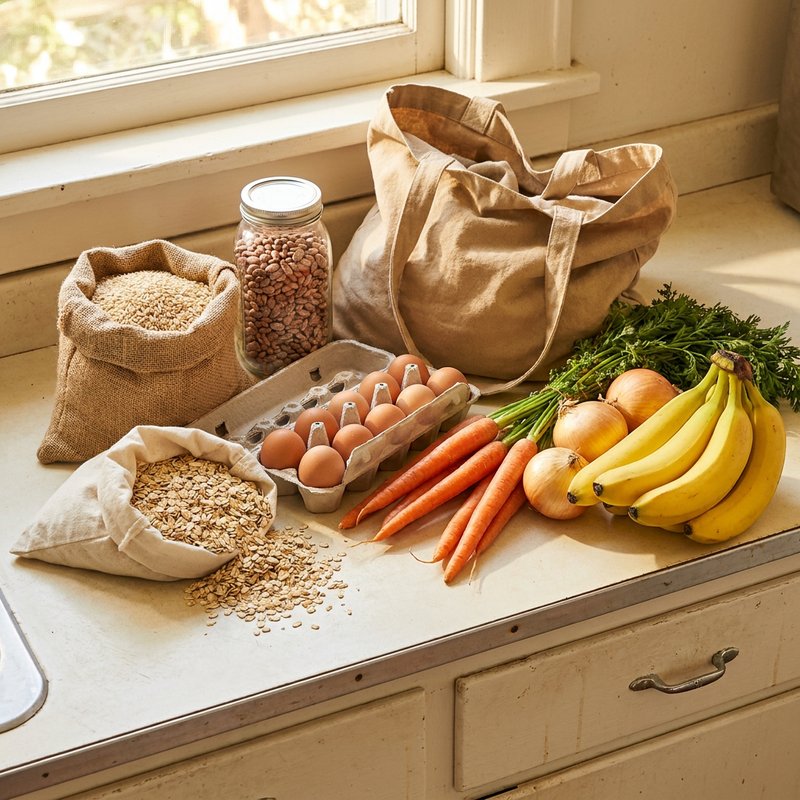
A simple weekly meal plan built on staples keeps groceries, one of your biggest flexible costs, from creeping up. Plan five dinners, shop with a list, and lean on frozen and batch-cooked meals. Groceries are where a plan either holds or leaks, so a little structure here protects the whole budget. Our cheap meal ideas make it painless.
9. Keep a cheap, reliable car
A modest, dependable, paid-off car protects a single mom’s budget more than almost any other choice. Transportation is the second-biggest line for most households, and a big car payment quietly eats the money that could be savings. Reliable and boring beats new and expensive every time when one income is on the line.
10. Keep one small line for joy
Leave a small, guilt-free amount in the budget for you and your kids, because a plan with no joy gets abandoned. Even $20 for a treat or a tiny freedom fund keeps the whole thing sustainable. Why does this matter on a tight budget? Because budgeting is a marathon, and marathons need rest stops. A little joy is not a leak; it is what keeps you going.
None of these tips require more income, only a plan built for your real life. Start with one this week, maybe the automatic $10 transfer or the lowest-month budget, and let the small wins stack. You are doing one of the hardest financial jobs there is, and doing it on your own terms. Browse more budgeting on one income guides when you are ready for the next step.
Found this helpful? Pin this guide so you can come back to it anytime.
Frequently Asked Questions
How do single moms budget on a low income?
Single moms budget on a low income by planning from their lowest-earning month, giving every dollar a job, and automating a small savings transfer first. Protect housing, transportation, and food, claim every benefit you qualify for, and keep one small joy line so the plan lasts. Structure, not willpower, is what works.
How much should a single mom save each month?
Start with whatever you can automate, even $10 to $25 a month, and build toward a $1,000 starter emergency fund, then three months of expenses. The habit matters more than the amount at first. As income rises or costs ease, raise the transfer. Consistent small savings beat occasional big ones.
What benefits can single moms claim to stretch a budget?
Depending on income, single moms may qualify for the Earned Income Tax Credit, the Child Tax Credit, SNAP, WIC, childcare assistance, and utility help. These programs are built for one-income families. A free tax-prep service or your state benefits site can confirm what you qualify for, often in a single afternoon.
Should a single mom talk to a professional about money?
For everyday budgeting, these tips are enough to start on your own. For bigger questions like debt, taxes, or divorce finances, a qualified professional or a nonprofit credit counselor is worth it. This article is general education, not personal financial advice. When a decision feels high-stakes, get guidance tailored to your numbers.