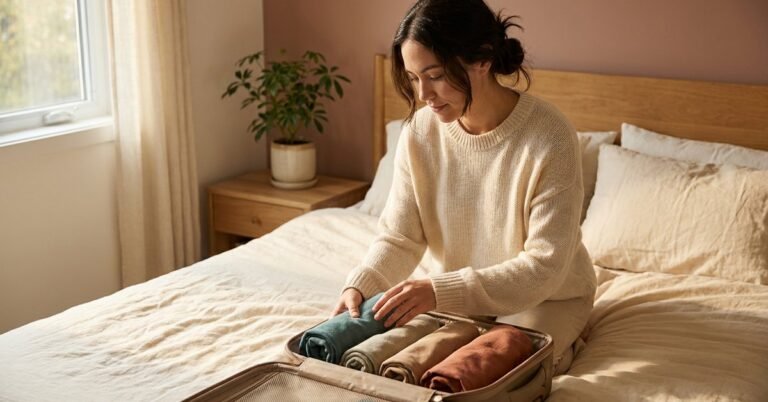
This post contains no affiliate links today. If that ever changes, I will say so right here, at the top of the post. This reflects real travel experience and research, not a promise that any one piece works for every body or every trip.
A travel capsule wardrobe usually gets explained as a styling trick, a neat little grid of tops and bottoms someone posted online. The real reason it matters for a woman on one income is closer to money than to fashion. The pay gap alone costs women an estimated $542,800 over a 40-year career, according to an AAUW analysis of Census Bureau data reported by Bankrate, a gap that never fully closes on its own. A closet full of single-use travel outfits is one more place that gap quietly shows up: money spent on clothes worn once, for one trip, then never mixed with anything else again. A travel capsule wardrobe fixes that at the closet, not just the suitcase.
The short version: A travel capsule wardrobe that mixes and matches comes down to one color story, fabrics that actually travel well, and a single rule: every piece has to work with every other piece, no exceptions. Most 2-week trips need far fewer pieces than they feel like they need, once the pieces are chosen this way.
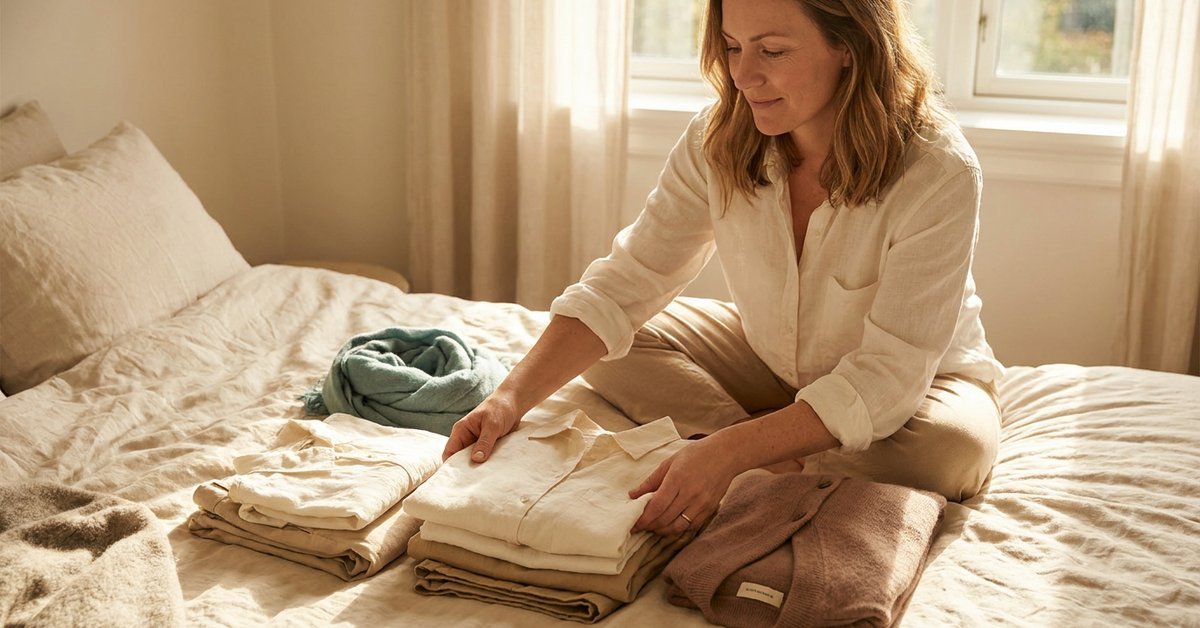

Save this for later
You will want this again. Pin it to your planning board so it is one tap away when you need it.
Pin it for later1. Pick One Color Story First
A travel capsule wardrobe starts with one neutral base color plus one accent color, decided before a single item gets packed, not after. Navy or black as the base, one accent like rust or olive, keeps every top able to pair with every bottom without a single mismatch. Skip this step and even a small pile of “neutral” pieces in slightly different shades of black stops mixing cleanly.
2. Choose Fabrics That Actually Travel Well
Merino wool and silk hold up to repeat wear without needing a wash, which is the real engine behind a small travel capsule wardrobe. One traveler described slowly replacing her closet with wool and silk pieces for exactly this reason, worn three times to work in two weeks, layered under blazers, never needing a wash in between. Is that unusual for wool? Not for merino specifically; it resists odor in a way cotton and most synthetics do not, and it folds down small enough to disappear in a packing cube.
3. The One Rule That Makes Everything Mix and Match
Every single item in the capsule has to be able to pair with every other item, with zero exceptions, or the “capsule” is really just a smaller messy closet. One backpacker three months into an extended trip put it plainly, according to an account she shared on r/solotravel: her whole system ran on one rule, that everything without exception had to go with everything else. Does the item count even matter next to that one rule? Not nearly as much as people assume. That is the actual mechanism behind a capsule that mixes and matches, not the item count.
Where This Rule Breaks Down
One patterned item, one odd-colored shoe, one piece bought because it was cute rather than because it matched, and the whole system stops working. Is that one impulse buy really worth breaking the whole system? The fix is not willpower. It is refusing to pack anything that fails the one-rule test before it goes in the bag.

4. How Many Pieces a 2-Week Trip Actually Needs
A 2-week capsule realistically needs 3 tops, 2 bottoms, and 1 outer layer, worn on rotation with laundry done once or twice along the way. Is that too few for two full weeks? It works because of the mix-and-match rule: 3 tops and 2 bottoms already produce 6 different outfit combinations before a single accessory gets added.
5. Layer for Temperature Swings, Don’t Pack for Every Season
Packing thin layers that stack, rather than separate cold-weather and warm-weather outfits, is what lets one small capsule cover both a chilly morning and a warm afternoon. A packable sweater over the same top handles a 20-degree temperature swing without adding a second wardrobe’s worth of items to the bag.
6. One Dressy Piece That Pulls Double Duty
A single dressier piece, a scarf plus jewelry rather than a whole separate outfit, covers every “nicer” evening a 2-week trip is likely to include. Is a whole extra outfit really necessary for one nicer dinner? Dressy evenings do not need a dedicated outfit at all: the same daytime top, worn with a scarf and simple jewelry, reads as put-together without adding one more item to the capsule.
Do You Need to Buy New Clothes to Build a Capsule Wardrobe?
No: most closets already contain a working travel capsule wardrobe once items get sorted by the mix-and-match rule instead of by outfit. Given how much of the pay gap ends up absorbed by small, repeated purchases over a career, buying an entirely new set of “travel clothes” for every trip is exactly the kind of spending that quietly adds up. Building the capsule from pieces already owned, then filling only the real gaps, keeps that money in the travel fund instead.
One traveler, near the end of a 3-month backpacking trip that crossed several seasons, described the honest version of this system: content and self-aware about a 55-liter bag kept manageable by exactly one rule, and a large stash of underwear because hand-washing was her least favorite chore, done only once every two weeks. Owning fewer clothes had a second payoff she had not expected going in: she could split a laundry load with other travelers and share the cost, instead of paying for a full wash alone.
A woman who has traveled light since long before “onebagging” had a name for it put it simply: she still overfills every bag by about 5 to 10 percent, and she is still learning after two decades of doing this. A travel capsule wardrobe is not a one-time perfect system. It is a rule you get better at applying every time you pack.
Anyone ready to organize the bag itself, not just what goes in it, can compare 12 genius packing cube hacks to fit more in your bag, or start with the carry-on packing hub for the full list of guides on this site. Best carry-on luggage picks for pairing with this capsule are coming soon to the blog.
Found this helpful? Pin this guide so you can come back to it anytime.
Frequently Asked Questions
How do you build a travel capsule wardrobe that mixes and matches?
Pick one base color and one accent color first, choose fabrics like merino wool or silk that resist odor and wrinkles, then apply one rule: every piece has to pair with every other piece before it goes in the bag.
How many pieces does a travel capsule wardrobe need for 2 weeks?
Around 3 tops, 2 bottoms, and 1 outer layer, worn on rotation with laundry done once or twice along the way. The mix-and-match rule means those 5 pieces alone produce 6 different outfit combinations.
Do you need to buy new clothes to build a capsule wardrobe?
No. Most closets already contain a working travel capsule wardrobe once items are sorted by the mix-and-match rule instead of by outfit. Fill only the real gaps rather than replacing the whole closet.
What fabrics work best for a travel capsule wardrobe?
Merino wool and silk hold up best to repeat wear without needing a wash, since merino in particular resists odor in a way cotton and most synthetics do not, and both fold down small for a packing cube.
How do you handle dressy occasions in a small travel capsule?
One scarf plus simple jewelry, worn over an existing daytime top, covers most “nicer” evenings without adding a dedicated outfit to the capsule.