This post may contain affiliate links. If you buy something through one, this site may earn a small commission at no extra cost to you. Prices and airline rules change. Verify current baggage policy before you fly.
A winter packing list carry on has one real enemy: bulk, not cold. One traveler learned this the hard way at 5 a.m. in Spain, weighing a 30-minute walk to the train station against a €3 rideshare and choosing the walk to save money, a choice she later regretted once safety mattered more than the fare. Winter carry-on packing works the same way. Every bulky sweater saved for “just in case” is a decision made before the trip that gets paid for during it.
The short version: Fitting bulky winter clothes in one carry-on means layering thin, not packing thick: 1 mid-weight coat worn on the plane, 2 to 3 thin thermal layers, and fewer bulky sweaters than feels safe. Compression packing cubes and one shared color story make the rest of the math work.


Save this for later
You will want this again. Pin it to your planning board so it is one tap away when you need it.
Pin it for laterWhy Bulk, Not Cold, Is the Real Winter Packing Problem
A winter packing list carry on fails most often because of volume, not temperature, since one bulky sweater can eat the same space as three thin layers folded flat. The fix is not fewer warm items, it is choosing thin, layerable warmth over single heavy pieces that only do one job.
Does that mean sacrificing actual warmth for space? Not if the layering order is right. Three thin layers worn together trap more warm air than one thick sweater, while packing down to a fraction of the space when not worn.
What a Winter Packing List Carry On Usually Gets Wrong
Most winter packing mistakes come from packing for the coldest possible moment of the trip instead of the average one, which adds bulk that goes unused for 90 percent of the days traveled. A single extreme-cold contingency piece, a second heavy coat or a bulky snow layer packed “just in case,” is usually the first item that should come back out of the bag.
Pack for the Average Day, Not the Coldest Hour
Does skipping the extreme-cold backup piece feel risky? It rarely is, since one worn coat plus a compressed mid-layer already covers a genuine cold snap. A destination’s actual average winter temperature, not its coldest recorded hour, should decide what makes the final list.

The Complete Winter Packing List for One Carry-On
A complete winter carry-on packing list covers a worn coat, thin base layers, one mid-layer, bottoms, and shoes chosen for warmth without bulk, all built around a single color story. Which single choice saves the most room? Wearing the heaviest coat onto the plane rather than folding it into the bag, since that alone can free up nearly a third of total carry-on space.
| Category | Quantity | Note |
|---|---|---|
| Coat | 1 | Worn on the plane, not packed |
| Thermal base layers | 2-3 | Merino or synthetic, not cotton |
| Mid-layer | 1 | Fleece or thin puffer, compresses flat |
| Bottoms | 2 | 1 pair lined, 1 pair regular |
| Sweaters | 2 | Thin knits, not bulky wool |
| Shoes | 2 pairs | 1 worn, 1 packed, both weatherproof |
How Compression Cubes Solve the Bulk Problem
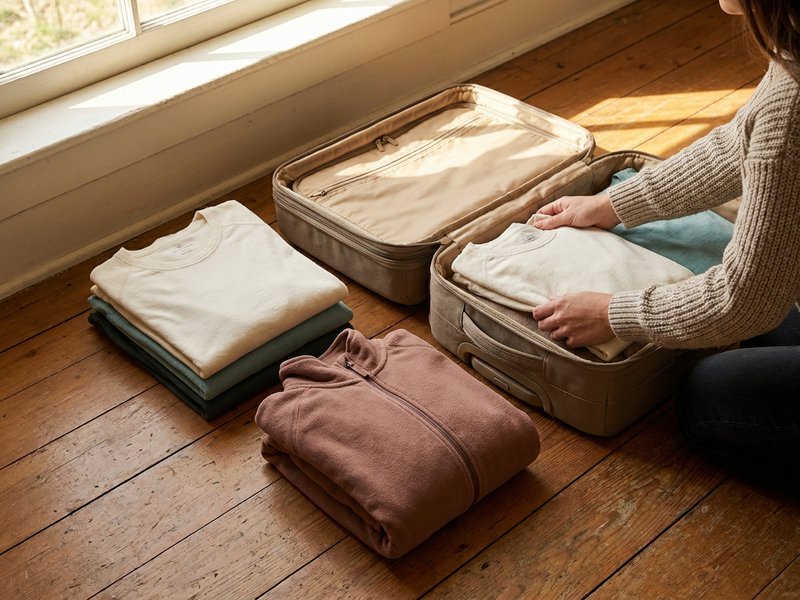
Compression packing cubes typically shrink bulky knitwear to 40 to 50 percent of its original packed size, which is what actually makes a winter carry-on-only list possible. Does compression damage delicate fabric over a long trip? Rarely, for the wool and synthetic blends most winter travel clothing is made from, though very loose knits do best folded rather than rolled before compressing.
Why the Coat Worn on the Plane Matters Most
A winter coat is almost always the single bulkiest item on any packing list, and it is the one item that never needs to go inside the bag at all. Wearing it through security and onto the plane, even when it is uncomfortably warm in the terminal, is the single highest-impact space decision on this entire list.
What Married Solo Travelers Learn About Packing Efficiency
Solo travel forces a packing discipline that family trips rarely require, since no one else is available to carry a second bag when the first one runs out of room. One woman, married for a decade with two sons at home, started traveling solo about four years ago once she realized waiting for her husband, who dislikes flying and prefers one trip a year at most, was not a plan she wanted to keep living by.
Her arrangement now: he stays home with the boys, she travels alone three to four times a year, most recently to Jordan and Egypt, with a solo trip to Spain next on the calendar. Does traveling solo change how she packs? It does. Carrying everything herself, with no one to hand off an overflow bag to, made a tight, compressed carry-on list a habit long before it became a strategy worth writing down.

Choosing Fabric Over Warmth Alone
Fabric choice matters more than raw warmth when packing winter clothes into one bag, since two garments rated for the same temperature can pack at wildly different volumes. Merino wool and technical synthetics compress to a fraction of their relaxed size and recover their shape afterward, while cotton fleece and heavy acrylic knits stay bulky no matter how tightly they get rolled.
Why does that matter for a one-bag winter trip specifically? Two sweaters that feel equally warm in a store can differ by half the packed volume once compressed, and that difference is exactly what decides whether the bag zips closed without a fight.
Testing Your Winter Packing List Carry On Before You Fly
A finished winter packing list carry on should get one real test before departure day: fully zip the bag, then carry it up and down a flight of stairs without wheeling it. A bag that struggles to lift onto an overhead bin rack at home will fail the same test in an airport, just with less room to repack on the spot.
What should happen if the bag fails that test? Pull one bulky sweater or a second pair of shoes back out rather than accepting a bag that needs help lifting. Whatever gets cut at home is one less thing to manage at a gate check counter later.
Off-Season Timing Solves Half the Winter Travel Budget
Winter carry-on packing and winter travel budgets solve similar problems the same way: choosing the off-peak window instead of paying full price for the same destination in high season. One couple wanted an all-inclusive, five-star resort with a personal butler, and booked it in Playa del Carmen during hurricane season rather than the winter peak. The stay came in at roughly a quarter of peak-season pricing, and the resort stayed uncrowded for the entire visit.
The same couple later applied identical off-peak logic to a springtime museum trip, buying discounted passes and flights and staying in a small apartment rental to hold the total cost down. Does that off-season logic apply to a winter carry-on trip too? It does, since a lighter bag and a lower-season fare solve two different halves of the same winter travel budget.
The TSA’s liquids rule covers what fits in a carry-on toiletry bag, worth checking again before a winter trip. The IATA carry-on size guidance summarizes how baggage limits vary by airline, since a bag that fits one carrier can still get gate-checked on another. For a full luggage breakdown, this site’s roundup of the best carry-on luggage for women compares bag sizes and materials built for repeat winter travel.
Found this helpful? Pin this guide so you can come back to it anytime.
Frequently Asked Questions
How do you fit bulky winter clothes in a carry-on?
Wear the heaviest coat on the plane, use compression packing cubes for sweaters, and choose thin thermal layers over single bulky pieces. Compression cubes typically shrink knitwear to 40 to 50 percent of its original packed size, which is what makes a winter carry-on-only list realistic.
Should I pack more sweaters or more thin layers for winter travel?
More thin layers. Three thin layers worn together trap more warm air than one thick sweater while packing down to a fraction of the space when not being worn, which is the core trade-off behind every winter carry-on packing list that actually closes without a fight.
Do compression cubes damage winter clothing over time?
Rarely, for the wool and synthetic blends most winter travel clothing is made from. Very loose or delicate knits tend to do better folded rather than rolled before compressing, so check fabric care labels before compressing anything unusually delicate or hand-knit.
Is winter a cheaper time to book travel than peak season?
Often, yes, especially in destinations with a distinct off-peak window. One travel example priced an all-inclusive resort stay at roughly a quarter of peak-season cost simply by booking during the region’s off-season, showing how much timing alone can shift a winter travel budget.