This post contains no affiliate links today. If that ever changes, I will say so right here, at the top of the post. Every trend below comes from real search data or a woman who actually lived it, not a guess.
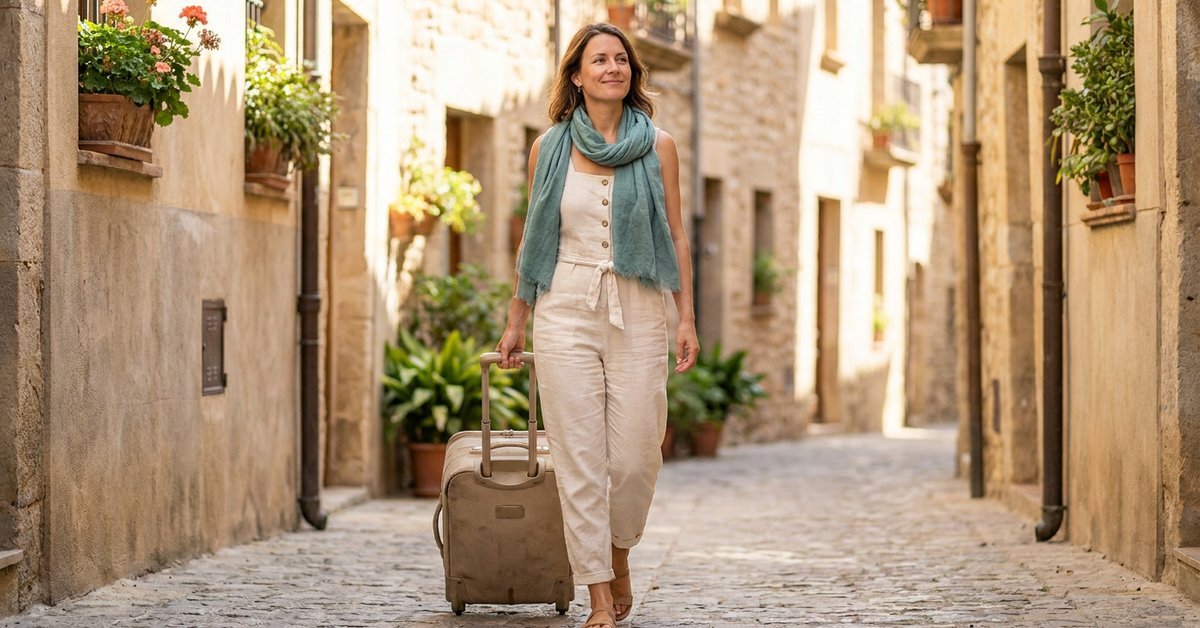
Solo female travel trends 2026 center on logistics, not a new destination: more women are packing one carry-on, funding trips with credit card points instead of a second income, and researching real numbers before they book instead of chasing inspiration alone. One woman who travels alone through Europe said what surprised her most was not the places, it was how comfortably a single carry-on covered a 3-week trip once she stopped treating every day as needing its own outfit.
The short version: Solo female travel trends 2026 center on logistics over inspiration: one carry-on, points funding more trips, safety research before booking, and travel funds priced by the day instead of guessed at. Search interest in solo travel rose 380% between 2017 and 2020, before most trend pieces noticed.

Save this for later
You will want this again. Pin it to your planning board so it is one tap away when you need it.
Pin it for laterSolo Female Travel Trends 2026: What’s Actually Driving Them?
The interest did not spike recently, it spiked years before most trend pieces noticed it. A Google Trends search showed a 380% increase in search interest for solo female travel between January 2017 and January 2020, well before the pandemic-era travel boom most articles credit for the shift. A global travel study from that same window found women already made up the bulk of solo leisure travelers, so the rise reflects existing travelers researching more, not a new audience discovering the idea.
Why does the timeline matter? Because it tells you what kind of content and planning actually serves this reader in 2026: real logistics, not inspiration alone. The women driving this trend were already traveling; they wanted better numbers, not permission.
Trend: Credit Card Points Are Funding More Trips Than a Second Income
More solo travelers are treating points and miles as the trip budget itself, not a bonus on top of one. One single mother earning well under $80,000 a year assumed the points-and-miles world was built for people spending far more than she does. She put her regular monthly bills on one credit card trifecta and paid it off in full every month, and the sign-up bonuses alone turned into multiple free hotel nights for her two kids, with no extra money spent to earn them.
How the Math Works Without Overspending
The spending has to already be happening. A card only pays for a trip when it replaces bills you were paying anyway, not when it becomes a reason to spend more. Does this work if you carry a balance month to month? No. Interest charges erase a sign-up bonus faster than points can rebuild its value, so paying in full stays the rule. That same single mother is now piecing together a Costa Rica trip using the spend she was already making before she ever opened the card.

Trend: One Carry-On Is Becoming the Default
Carry-on-only travel is shifting from a packing challenge to the expected default for a solo trip of 2 to 3 weeks. Part of the push is financial: many airlines now charge $35 to $65 each way to check a bag, a fee that disappears entirely once the trip fits in one carry-on. Part of it is simply practical, since a solo traveler has nobody to help carry, watch, or wait on a second bag.
What Changed to Make This Possible
Packing cubes and a willingness to re-wear clothing did most of the work for the woman above. Once something actually needed a real wash, she found that a lot of hostels, hotels, and even entire cities offer laundry that is free or costs a small charge. What if you are not used to re-wearing outfits on a trip? Start with one re-worn item on a short trip first; the habit, not the bag size, is the part that takes adjusting.
Trend: Safety Research Happens Before Booking, Not After
Solo female travelers are checking official advisories before they pick a destination, not after they have already booked it. The U.S. Department of State rates every country from Level 1, Exercise Normal Precautions, to Level 4, Do Not Travel, and keeps the full list on its travel advisories page, updated country by country with a date attached.
The CDC’s travel health notices page works the same way for health risks, from required vaccinations to active outbreak warnings in a specific region. Does checking just one of the two cover you? Not fully; one tracks crime and political risk, the other tracks health, and checking both before booking is becoming the expected first step, not an extra one.
Trend: Group “Solo” Trips Are Rising Alongside True Solo Travel
A growing share of “solo” trips are actually solo bookings on a small group tour, not a woman traveling entirely alone. Women-only and small-group tour companies have expanded their 2026 calendars specifically around this demand: travel alone, but not necessarily be alone once you land. It is not a retreat from independence; it is a second format for the same underlying trend, logistics handled by someone else for travelers who want company on the road without planning it themselves.
Trend: Travel Funds Are Being Priced by the Day, Not Guessed At
Instead of saving a round number and hoping it covers the trip, more solo travelers are pricing a daily figure first. But how do you actually set that number? Total the trip’s expected cost, divide by the number of days you will be traveling, and bank the result in its own account before you book anything else. An underspent day can roll forward, and an overspent one gets clawed back over the next few days instead of derailing the whole trip.
What Should You Actually Do With These Trends This Year?
Pick one trend to act on this month instead of trying to apply all five at once. If a second income is not funding your travel yet, start with the points-on-bills-you-already-pay approach. If packing is the barrier, try one short trip with a single carry-on before committing to it for a longer one. This site’s comparison of Airbnb and Vrbo for solo female travelers is worth reading next if lodging is the piece still undecided, and the roundup of the best travel insurance for solo female travelers covers the safety-research trend in more depth.

The Smallest Win Still Counts
None of these trends require an expensive overhaul; most of them start with one trip done slightly differently than the last one. A minimalist traveler in her 40s came back from 9 days in Portugal with an 18-liter bag, just over a dozen items total, and did laundry every other night so everything was dry by morning. When her Airbnb would not let her in for hours after she landed, she toured Lisbon with her whole bag on her back and still carried less than most of the tourists around her.
She had done 6 weeks in Europe the summer before on almost the same list, adding only a skirt and a dress. The trend that matters most for 2026 is not any single tip above; it is this same small, repeatable decision, made once and then made again on the next trip.
Found this helpful? Pin this guide so you can come back to it anytime.
Frequently Asked Questions
What are the biggest solo female travel trends for 2026?
One carry-on instead of two bags, credit card points funding trips instead of a second income, safety research happening before booking, and travel funds priced by the day instead of a round guessed number. Search interest in solo female travel itself has been climbing since well before 2020.
How do solo female travelers afford more trips without a second income?
By pointing credit card spending they were already doing, like regular bills, toward one card’s sign-up bonus, then paying the balance in full every month. The spend has to already exist; the card should replace planned spending, not create new spending.
Is it too late to start packing light if I’ve always checked a bag?
No. Start with one short trip and one re-worn outfit before committing to a full carry-on-only system. Access to laundry, not a smaller bag, is usually what makes it possible, and most hostels, hotels, and even whole cities offer it for a small charge or free.
How do I check if a destination is safe for solo female travel in 2026?
Check the U.S. State Department’s travel advisory level for the country, updated with a specific date, and the CDC’s travel health notices for the region. Both are free, current, and far more reliable than a single viral story about one traveler’s bad experience.