Her Own Compass shares financial education and personal experience, not individualized financial, investment, or tax advice. Every situation is different, so please consult a qualified professional before making major money decisions.
The fastest way to pay off small debts first is to rank every balance by size, not interest rate, and knock out the smallest one completely before touching the next. Six small debts, cleared in order, usually take 60 to 90 days on one income and free up a real payment you can redirect. One Reddit thread on r/debtfree traces this back to a single realization: a woman deep in beauty and skincare content online finally noticed the videos were selling her something. That shift led to a strict no-buy year and $39,000 of debt gone.
The short version: Pay off small debts first by listing every balance smallest to largest, throwing every spare dollar at the smallest one, and rolling that payment into the next once it hits zero. Six small balances typically clear in 2 to 3 months and hand you a real payment to redirect, not just a lighter mood.


Save this for later
You will want this again. Pin it to your planning board so it is one tap away when you need it.
Pin it for laterWhy go after small debts first?
Small debts first works because closing an account completely, even a tiny one, changes behavior in a way that a slightly-smaller big balance never does. This is the debt snowball, and it trades mathematical efficiency for something more valuable on one income: proof, fast, that the plan actually works. A $300 balance gone in three weeks feels different from a $12,000 balance dropping to $11,700.
Why does that feeling matter more than the interest saved? Because the debts that get abandoned are the ones where the first win takes a year to arrive. Small-first gives you a win inside a single pay cycle, which is what keeps a one-income household at the table for month two.
Pay off small debts first: the 6 to target for a quick win
The 6 debts worth clearing first are any balance under $500, a single missed medical bill, one store card, a small personal loan under $1,000, a buy-now-pay-later plan, and any account already sent to a single collector. Order them smallest balance to largest inside this list, not by which feels most urgent. What if two debts are almost the same size? Pick the one with the fewer monthly payments left, since closing an account is the goal, not just moving a number down.

The balances under $500
Anything under $500 is the true starting line: a leftover credit card balance, a phone upgrade plan, a small line of credit at a furniture store. These clear in one to four paychecks depending on the amount redirected, and closing the account removes a minimum payment from next month’s budget entirely, not just a few dollars off it.
A single missed medical bill belongs in this group too, even if the number looks bigger on paper. Providers routinely accept $25 to $50 a month with no interest if you call and ask, which turns a $600 bill into a fast small-debt win instead of a slow one.
The debts that quietly compound
A buy-now-pay-later plan and a store card belong in the same group because both carry rules most people never read. A missed buy-now-pay-later installment can trigger a flat late fee of $7 to $10 per missed payment across a 4-payment plan, and a store card interest rate frequently sits at 28 to 33 percent APR, well above a typical credit card. Clearing both early stops a small debt from growing back while you’re paying off the next one.
A small personal loan under $1,000 and any single account already with one collector round out the list. A one-collector account is worth an early call: many accept a lump-sum settlement at 40 to 60 cents on the dollar if you can pay it in a single payment, which shortens the timeline dramatically.
How much do you actually save by starting small?
Clearing 6 small debts in the $200 to $800 range typically frees $150 to $300 a month in minimum payments within 60 to 90 days, money the mathematically optimal high-interest-first method usually takes 8 to 12 months to release. That gap is the entire argument for small-first on one income: speed to a usable payment beats a marginally lower total interest bill most people abandon before they ever collect it.
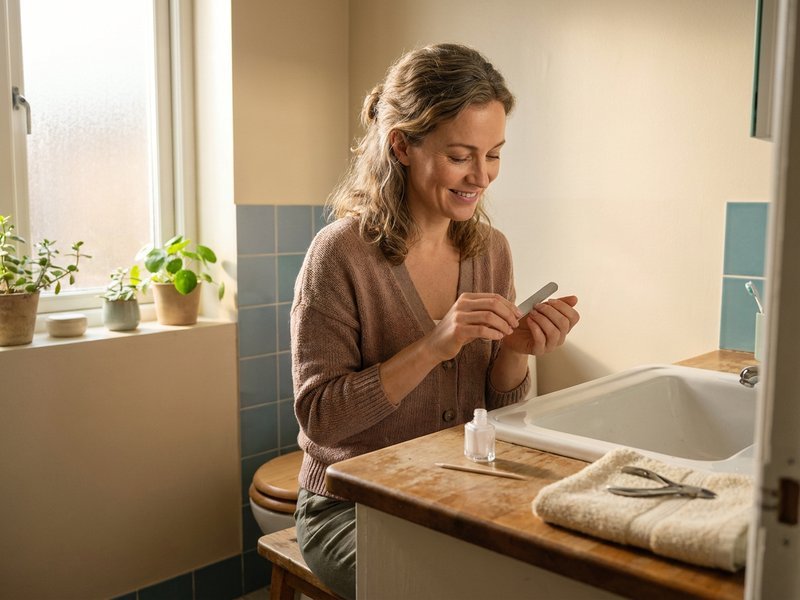
One Reddit account from the same r/debtfree thread put real numbers on the discipline behind this: she started the year at $7,800 in credit card debt and worked it down to $1,000 by cutting nail and eyelash appointments and buying a cheap at-home kit instead. The trick that actually held, in her words, was leaving her credit cards at her mother’s house, in a different city entirely, so swiping them took real effort instead of a reflex.
The trick that keeps a paid-off card from creeping back up
A small debt you just paid off stays paid off when the card that caused it becomes physically hard to reach, not just mentally off-limits. Willpower fades by week three; distance does not. Put the card somewhere that takes a real trip to retrieve, ask a family member to hold it, or freeze it in a block of ice in the freezer, an old but genuinely effective trick for anyone who reaches for a card out of habit rather than need.
Isn’t closing the account safer than just hiding the card? Not always. Closing a paid-off account can shorten your credit history length and raise your utilization ratio on the cards that remain, both of which can lower a credit score temporarily. Keeping the account open at a $0 balance, but out of reach, protects the score while still removing the temptation.

Should you pick up more hours to pay these off faster?
Not automatically, and for some women on public benefits, more income can cost more than it earns. A benefits cliff is real: one 30-year-old mother on r/debtfree, carrying $7,050 in credit card debt plus two personal loans, calculated that a lower-paying job actually made more financial sense once daycare eligibility for Head Start, plus SNAP and WIC, was factored in. In her own words, she had to “blow up my life” to make the math work, dropping her income from $40,000 to $20,000 a year on purpose.
Does that mean extra hours are never worth it? No. It means run the actual numbers on any benefit tied to your income threshold before assuming more hours automatically means more progress on these six debts. A caseworker or a free nonprofit credit counselor can run that math with you in one call.
Where a tax refund actually fits in
A tax refund is the single fastest way to clear 2 or 3 of these six debts in one payment, and the Earned Income Tax Credit adds real money to that refund for many one-income households. The IRS EITC page lists the current income limits and credit amounts, which are worth checking every filing year since they adjust annually. Directing that refund at the two smallest remaining balances, rather than splitting it across all six, keeps the snowball’s momentum instead of diluting it.
What if a debt is already with a collector by the time the refund arrives? Pull a free credit report first through the FTC’s free credit report guidance so you know the actual balance and collector before you call, since collection balances sometimes shrink through settlement negotiation before you ever send a payment.
What changes once the small debts are gone
Once these six accounts read zero, the payment that used to service them becomes the first real deposit toward whatever comes next, whether that is a larger debt, an emergency fund, or the first $500 of a travel fund. Where should that freed-up payment go first? Toward the largest remaining balance if one exists, or into a starter emergency fund if the six small debts were the only debt in the picture. This is also the point where a written plan for the bigger debts left standing starts to matter more than motivation. This site’s roundup of the best books for a debt-free journey covers the next layer of strategy once the quick wins are behind you.
If a nonprofit credit counselor feels like the right next step, particularly for any account still sitting with a collector, the National Foundation for Credit Counseling connects women to certified counselors for free. For the rest of the debt-payoff series, including trackers and the habits that keep a payoff plan on track, this site’s debt payoff hub collects every guide in one place.
If starting from zero feels more accurate than starting with six small wins, this site’s debt payoff for beginners guide walks the full plan from the very first step, and the habits that carried women through to the other side are collected in 9 habits of women who paid off debt on a single income.
The bottom line on paying off small debts first
Ten years after choosing between groceries and the electric bill, one woman from that same r/debtfree community described a life that started exactly this way, one small balance at a time. Today she is debt-free, house included, with healthy savings behind her. The habits from those early small wins never fully left: two massages in her entire life, drugstore skincare, one manicure in five years, a nice car bought used. None of it reads as deprivation in her account. It reads as a plan that worked, six small debts at a time, long before the big ones ever moved.
Found this helpful? Pin this guide so you can come back to it anytime.
Frequently Asked Questions
What are the best small debts to pay off first?
Rank every balance under $1,000 smallest to largest: leftover card balances, a single medical bill, a store card, a buy-now-pay-later plan, a small personal loan, and any account with one collector. Clear the smallest completely before moving to the next, rather than splitting payments across all six.
How long does it take to pay off 6 small debts?
Most one-income households clear six debts in the $200 to $800 range within 60 to 90 days once every spare dollar targets the smallest balance first. The exact timeline depends on how much can be redirected each pay cycle, but the momentum builds fast once the first account closes.
Is the debt snowball method actually the smartest way to pay off debt?
Not mathematically, no. Paying the highest interest rate first saves more money over time. Small-first trades some of that savings for speed and a real, felt win inside the first pay cycle, which is often what keeps a one-income household following the plan long enough to finish it.
Should I close a credit card once the balance hits zero?
Not automatically. Closing a paid-off account can shorten your credit history and raise utilization on the cards left open, both of which can dip your score. Keeping the account open at zero, but physically hard to reach, protects the score while still removing the temptation to reuse it.
Is it worth talking to a financial advisor before paying off small debts?
For six small balances under $1,000, most women can run this plan themselves with a simple list and a redirected payment. A free nonprofit credit counselor becomes worth the call once any account has gone to a collector or a benefits threshold is part of the income decision.