This post contains no affiliate links today. If that ever changes, I will say so right here, at the top of the post. Every price and fee below comes from a real airline policy or a traveler’s actual trip, not a hypothetical.
Carry on vs checked bag comes down to three numbers most travelers never actually check: the fee, the time, and the odds your bag gets lost. One woman who flies solo eight times a year put it simply: she will not cheap out on a flight, and that includes paying to check a bag when the trip calls for it. Her rule works because she decided it in advance, not at the gate.
The short version: A carry-on wins for most solo trips under ten days, especially on a budget airline where the carry-on fee can cost less than checking. A checked bag wins for longer trips, bulky cold-weather layers, or when a full-service airline includes it free and a lost or delayed bag is not catastrophic to your plans.

When a Carry-On Bag Actually Wins
A carry-on wins when the trip runs ten days or fewer, the destination lets you do laundry, and you want to skip the baggage claim entirely. No wait at the belt means you can walk straight from the jet bridge to a train, a rideshare, or a connecting gate, which matters most on a tight layover or a solo trip where no one is waiting on the other end to help if something goes wrong.
Does a carry-on really hold two weeks of clothing? For most climates, yes, once you plan a small capsule of mix-and-match pieces instead of packing a full outfit per day. A carry-on also removes the one risk a checked bag always carries: it cannot be lost by anyone but you, since it never leaves your hands. One more limit worth planning around: the TSA’s 3-1-1 liquids rule caps carry-on toiletries at 3.4 ounces per container, so a carry-on-only trip usually means travel-size refills or solid alternatives for anything liquid.
When Checking a Bag Is the Smarter Call
Checking a bag makes sense on trips longer than ten days, in cold-weather destinations where bulky layers eat your whole carry-on allowance, or whenever a full-service airline includes the first checked bag free. One frequent solo traveler’s firm rule is never to cheap out on the flight itself: a $2,300 trip to London that included a non-stop seat, better landing hours, and a checked bag beat a cheaper, three-connection discount fare that would have landed her exhausted at 7 a.m. and cost her a full day of the trip.
A checked bag also frees your hands and your shoulders for a long transit day, which matters more on a solo trip than a group one, since there is no one else to help carry anything if you are tired, sick, or navigating an unfamiliar station.
What a Carry-On Fee Really Costs on a Budget Airline
On several budget airlines, the carry-on fee can cost as much as or more than checking a bag, which flips the usual assumption that carry-on is always cheaper. A r/solotravel thread pushed back on the idea that the lowest sticker price is automatically the cheapest option, using Frontier Airlines as the example: the base fare is cheap, but once you add a carry-on bag, seat selection, and the first checked bag, all free on a full-service carrier, the total can land above a comparable full-service fare, on a seat the traveler called tight enough to be a joke.
How Budget Airlines Price Carry-On vs Checked Bags
Several budget carriers charge separately for a full-size carry-on that goes in the overhead bin, while a smaller personal item that fits under the seat usually rides free. That personal-item allowance is the real reason some solo travelers skip the overhead carry-on fee entirely and pack a larger under-seat bag instead, trading a little packing cleverness for a fee that can run $40 to $65 each way on a discount carrier.
How Much Time Does Checking a Bag Actually Cost You?
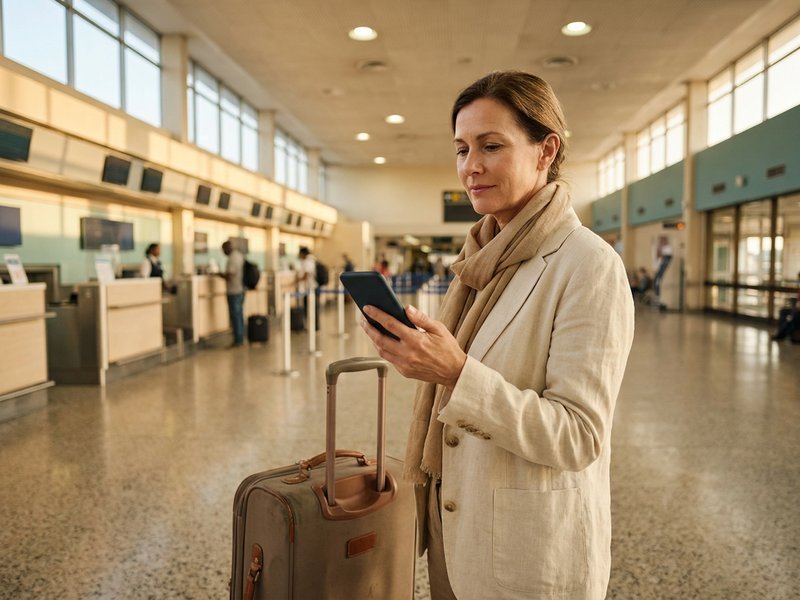
Checking a bag typically adds 20 to 30 minutes to your arrival, counting the walk to the carousel and the wait for your specific bag to appear. On a short layover, that gap can be the difference between making a connecting flight and missing it, since a checked bag that does not transfer in time means you do not fly without it, or you fly and hope it catches up.
Is 20 minutes really worth planning around? For a solo traveler with a tight connection or a late-night arrival and an early morning start, yes. That same stretch of time is often the gap between catching the last train into the city and paying for an unplanned taxi or a hotel night near the airport instead.
How Often Does a Checked Bag Get Lost or Delayed?
U.S. airlines mishandle roughly 6 to 7 bags for every 1,000 checked, according to the Department of Transportation’s monthly Air Travel Consumer Report, so the real odds of a problem on any single flight are well under 1%. Most mishandled bags are delayed, not permanently lost, and arrive within a day or two once an airline tracks them down.
Does that small risk matter if you are traveling alone? It matters more on a solo trip than a group one, since a delayed bag means delayed medication, chargers, or a change of clothes with no travel partner’s bag to borrow from in the meantime. The Department of Transportation’s Air Travel Consumer Report publishes the current mishandled-baggage rate by airline every month, so you can check a specific carrier’s record before a trip that cannot afford a delay.
Weight and Size Limits That Decide the Choice for You
A standard carry-on runs about 22 x 14 x 9 inches, while a checked bag has far more room, typically up to 50 pounds before a hefty overweight fee kicks in. If a trip genuinely needs boots, a coat, and layers for both warm and cold days, a carry-on’s size alone can force the decision before the fee ever does.

Does a Budget Airline Weigh Your Carry-On Too?
Several discount carriers enforce a weight limit on carry-ons, often 15 to 22 pounds, and will charge the carry-on fee anyway if the bag is overweight at the gate. Is a few extra pounds really worth risking that fee? Not usually, since the gate scale rarely allows an appeal once a bag is flagged. Most full-service U.S. airlines, by contrast, check carry-on size but not weight, which is one more reason the same bag choice costs differently depending on the airline, not just the route.
Carry On vs Checked Bag at a Glance
The table below lines up the real differences side by side, so you can match the choice to your specific trip instead of a general rule.
| Factor | Carry-On | Checked Bag |
|---|---|---|
| Typical cost | Free on full-service, $40 to $65 on budget carriers | $35 to $40 first bag, free on some full-service fares |
| Size/weight limit | About 22 x 14 x 9 in, 15 to 22 lb on budget airlines | Up to 50 lb before an overweight fee |
| Time at arrival | None, straight to the exit | 20 to 30 minutes at the carousel |
| Loss or delay risk | Close to zero, it never leaves you | About 6 to 7 per 1,000 bags mishandled |
| Best for | Trips under 10 days, tight connections, solo trips with no backup | Longer trips, bulky layers, a free first bag already included |
How One Traveler Matches Her Bag to the Flight
One woman’s solo trips run 4 days to 3 weeks, and she decides her bag the same way she decides her flight: by what actually serves the trip, not by habit. On a 10-day trip to London, she paid to check a bag and fly nonstop rather than save money on a cheaper fare with three connections, because arriving rested mattered more to her than the fee.
Her reasoning carries over directly: a seat sale that lands you exhausted at 7 a.m. costs you a real day of a short trip, and so can a missed connection chasing a checked bag onto a tight layover. Pricing the whole trip, flight and bag fees together, before booking either one is what keeps the decision from being made by accident.

Packing Habits That Make a Carry-On Easier to Stick To
Travelers who stick with a carry-on long-term usually run tight systems everywhere else in the trip, not just in the suitcase. One budget traveler on a teacher’s salary picks up a pay-as-you-go SIM from a pop-up kiosk at the airport or a train station instead of paying for international roaming, does free walking tours in every city, and carries a debit card with no foreign-transaction fees so she never pays an airport exchange counter’s markup.
Can a system like that actually fund a trip the fee math alone would not cover? For one traveler, yes: a single well-timed hotel points redemption covered two nights at a concert-weekend hotel rate that would otherwise have blown her budget, the same kind of deliberate trade-off that goes into choosing a bag. The habit is the same in both cases: price the real option before assuming the default is cheapest.
For the system that makes a single carry-on last a full two weeks, this site’s guide to packing a carry-on for 2 weeks without checking a bag walks through the actual capsule wardrobe. Packing cubes, covered in how to use packing cubes to stay organized on every trip, are what make that capsule fit in the first place.
The Simple Rule for Choosing Carry On vs Checked Bag
Price the flight and the bag fee together before you book, then let the trip length and the destination’s climate make the final call. One traveler’s four-month solo loop through Eastern Europe and the Balkans ran under $5,000 total, including flights, on a daily budget of $40 to $45, proof that the bag choice is one small piece of a much bigger budget that rewards planning over habit.
Under ten days, pack light and skip the belt. Longer, colder, or already free on your fare, check the bag and save your energy for the trip itself. For the full hub of packing guides built around this exact decision, see this site’s carry-on packing hub, and watch for the winter carry-on packing guide for bulky cold-weather layers if your next trip needs one.
Frequently Asked Questions
What is the real difference between a carry-on and a checked bag?
A carry-on stays with you and skips baggage claim entirely, while a checked bag rides in the cargo hold and carries a small risk of delay or loss. Carry-ons are also limited to about 22 x 14 x 9 inches and sometimes a weight cap, while checked bags allow up to roughly 50 pounds before an overweight fee applies.
How do I decide between carry on vs checked bag for a specific trip?
Price the flight and bag fee together first, since the cheapest fare on paper can flip once a carry-on or checked fee gets added. Trips under 10 days usually favor a carry-on, while longer trips, bulky cold-weather gear, or a free first checked bag already included on a full-service fare usually favor checking one instead.
Is it cheaper to carry on or check a bag?
It depends entirely on the airline you book. Full-service carriers usually make a carry-on free, but several budget airlines charge $40 to $65 for an overhead carry-on, sometimes more than their own checked-bag fee on the same route, so check both real prices on your specific fare before assuming carry-on automatically wins.
Can I bring just a carry-on on an international flight?
Yes, most international carriers allow a carry-on plus a personal item with no checked bag required at all. Some budget international airlines still charge separately for the overhead carry-on, and a few economy fare classes restrict you to the personal item only, so confirm the specific fare’s exact baggage policy before you book the ticket.