This post contains no affiliate links. If that ever changes, I will say so right here, at the top of the post. The health notes below are general travel information, not medical advice; if you have a history of blood clots or take blood thinners, talk to your doctor before a long flight.
Long flight essentials belong in your personal item, the one bag that stays under the seat in front of you: medications, a power bank, compression socks, water, warmth, and sleep gear. One professional woman in r/HerOneBag explains why that bag needs a plan. Traveling as a woman for work, she found, is a different job than traveling as a man: hair tools, shoes, and a full makeup case filled an entire carry-on before a single outfit went in. So the small bag has to do the thinking.
The short version: The long flight essentials that belong in your personal item are medications, a power bank, compression socks, an empty water bottle, a warm layer, dry-air basics, sleep gear, and one change of clothes. Pack them there because the personal item is the one bag that stays under your seat.

Save this for later
You will want this again. Pin it to your planning board so it is one tap away when you need it.
Pin it for laterWhy Long Flight Essentials Belong in Your Personal Item
Your personal item is the only bag guaranteed to stay within reach for the whole flight, so anything you cannot live without for 10 hours goes there. A carry-on in the overhead bin can end up rows away, or be taken at the gate when the bins fill. A checked bag can miss the connection entirely.
That makes packing the personal item a sorting job, not a shopping job. Ask one question about each item: would a delay or a gate-check make me miserable without it? If yes, it goes under the seat. Everything else can ride above. For the full carry-on side of the plan, see our carry-on packing list for women.
1. Every Medication You Need, for Everyone You Travel With
Pack every prescription and every just-in-case medicine in your personal item, never in a checked bag, and pack for the other people in your group too. A lost suitcase is an inconvenience. A lost blood pressure prescription at 2 a.m. in a foreign city is a crisis.
A single mom in r/HerOneBag planning a Southeast Asia trip with her kids explained why she packs medicine for everyone: she is the only adult who can carry weight or handle an emergency. If one child gets food poisoning, she cannot leave the others to run out for medicine, so she brings children’s and adult Imodium both. Her trip has nine flights, some capped at 7 kg of carry-on, and 11 hotels, and she is planning around a Patagonia Black Hole 30L as her personal item.
2. A Power Bank That Follows the FAA Rules
A power bank has to fly in your cabin baggage, because the FAA bans spare lithium batteries from checked bags. The FAA’s lithium battery rules also limit each rechargeable battery to 100 watt hours, which covers nearly every phone-size power bank, and note that many airlines set stricter limits of their own.
Check your airline’s page before you go, since some carriers now restrict how many power banks each passenger can bring or where they can be used on board. Keep the power bank and one charging cable in an outside pocket, so a dying phone never means digging through the whole bag.
3. Compression Socks and a Plan to Keep Moving
Compression socks and regular movement matter on a long flight because the CDC says anyone traveling more than 4 hours can be at risk for blood clots. The CDC’s page on blood clots and travel recommends moving your legs frequently and exercising your calf muscles to keep blood flowing.
The same page mentions graduated compression stockings for travelers at increased risk, after talking with a doctor. Does that mean everyone needs them? No, but they take up almost no space, so pack a pair if your doctor agrees. Set a simple rhythm: flex your ankles every time a meal or drink cart passes, and walk the aisle whenever the seatbelt sign is off.
4. An Empty Water Bottle and a Dry-Air Kit
Carry your water bottle empty through the checkpoint and fill it at a fountain on the other side, because the TSA liquids rule applies to full bottles, not empty ones. Under the TSA 3-1-1 rule, liquids in your carry-on must be 3.4 ounces (100 milliliters) or less per container, packed in one quart-size bag.
A bottle you control beats waiting for the drink cart, especially on overnight flights when service stops for hours. Why does it matter so much? Dry cabin air pulls moisture out of you faster than a day on the ground, and a headache on landing turns a good first day into a lost one.
Add a Dry-Air Kit to the Same Pouch
Lip balm, a travel-size moisturizer, and lubricating eye drops fit in the same clear 3-1-1 pouch, so security stays simple. Dry cabin air cracks lips and makes contact lenses itch well before landing. Want the full list of what travels well in a toiletry kit? Our guide to toiletry bag essentials for stress-free travel covers containers and leak-proofing.
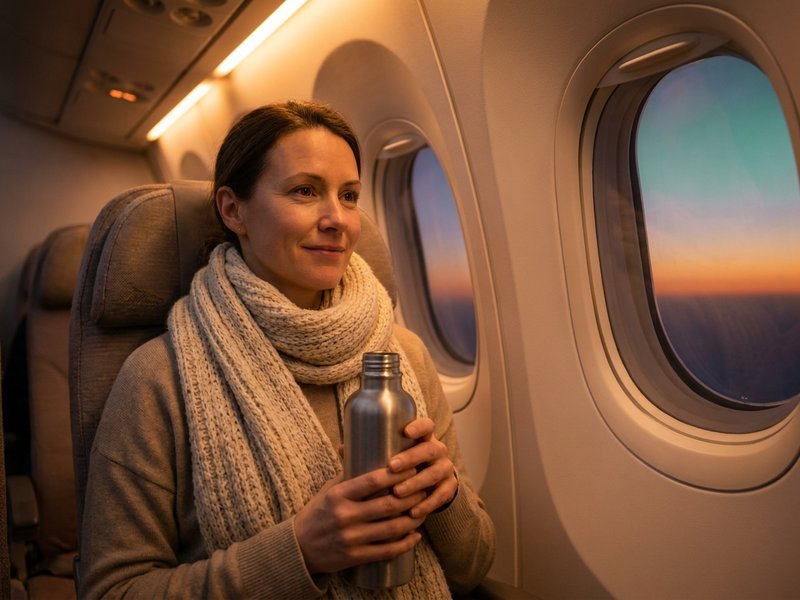
5. A Warm Layer That Doubles as a Blanket
Pack one large scarf or a lightweight wrap that works as a blanket, because cabin temperatures swing and the thin airline blanket is not always available. A big scarf also becomes a pillow cover, a privacy screen, and an extra layer at a chilly destination.
Plan the layer for both extremes, not the forecast. One r/onebag member packed for a late-fall UK trip around weather records showing an average of 12°C for the season, then landed to find “it was average 25-30’c and sunny.” That traveler now packs lightweight breathable shirts and pants as the base, long johns just in case, and a packable puffer. A big scarf works the same way in the cabin: loose when it runs hot, wrapped when it runs cold, and worn through the airport so it takes no bag space at all.
6. Earbuds, an Eye Mask, and an Inflatable Pillow
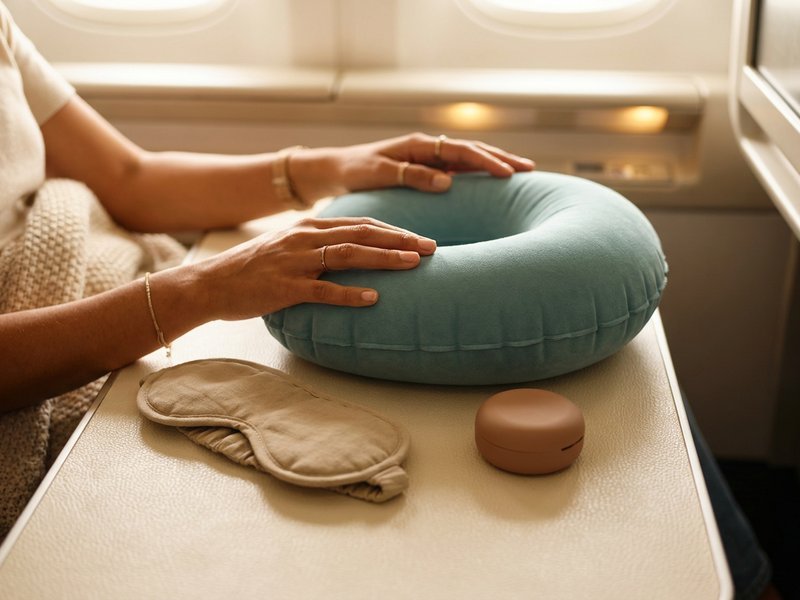
Choose an inflatable neck pillow over a foam one, because it deflates flat and frees up the under-seat space a foam pillow takes for the whole trip. Add noise-canceling earbuds and a contoured eye mask, and you have a sleep kit that fits in one hand.
Earbuds beat over-ear headphones for sleeping, since you can lean against the window without the band pressing into your head. Download shows, audiobooks, and a playlist before you board, because in-flight Wi-Fi is not something to count on over the ocean.
7. One Change of Clothes That Doubles as Day One
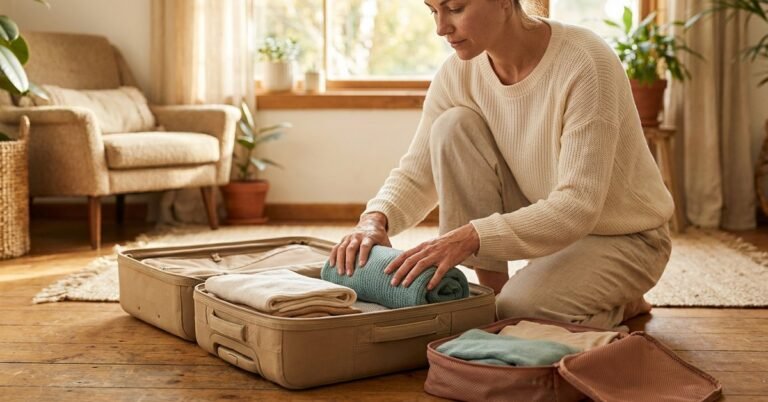
Pack your first-day outfit as the spare, rolled into the bottom of your personal item, so the backup clothes are never dead weight. Most packing lists treat the spare outfit as insurance you hope not to use. Make it the outfit you planned to wear on day one, and it earns its space whether the checked bag shows up or not. How much room does it really take? Very little, once it is rolled tight.
Include underwear and socks in the roll. For combinations that pack small and still look put-together, browse our cute and practical travel outfits for solo trips.
What Happens to Your Essentials If the Carry-On Gets Gate-Checked?
If your carry-on is taken at the gate, everything inside it goes under the plane, which is exactly why the true essentials should already be in your personal item. It happens even when a bag meets the rules.
A Rule-Following Bag Still Got Taken
A longtime Osprey Farpoint 40 user on r/onebag was forced to gate-check it multiple times on regional jets, including on a trip from Milwaukee to Amsterdam: “I bought the right size bag, followed the rules, packed carry-on only, and then still had to hand it over at the jet bridge.” On a tight connection at PHL, that meant waiting on the jet bridge for the bag, and the traveler began weighing a smaller Daylite 26+6 instead.
What Must Come Out of the Bag
Power banks and spare lithium batteries cannot go under the plane. The FAA requires them to be removed from a gate-checked bag and kept with you in the cabin. Pull out medications at the same moment, and your personal item holds everything that matters.
How to Pack Your Personal Item So You Never Dig Mid-Flight
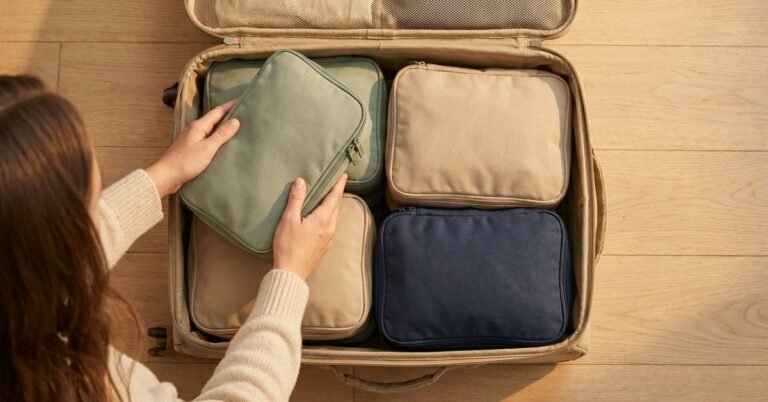
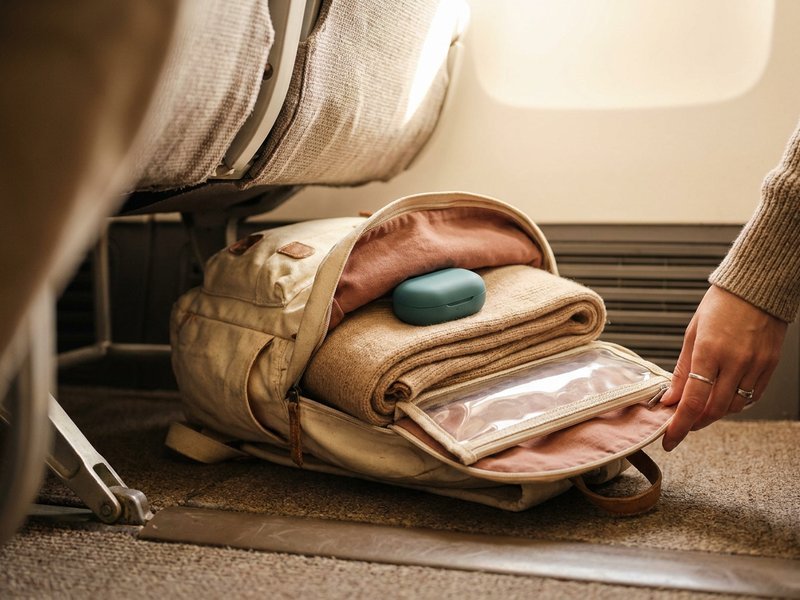
Pack in two layers: first-hour items on top, landing items on the bottom, so you reach everything you need without pulling the bag out from under the seat. A bag packed by category makes you empty it in your lap. A bag packed by timing does not.
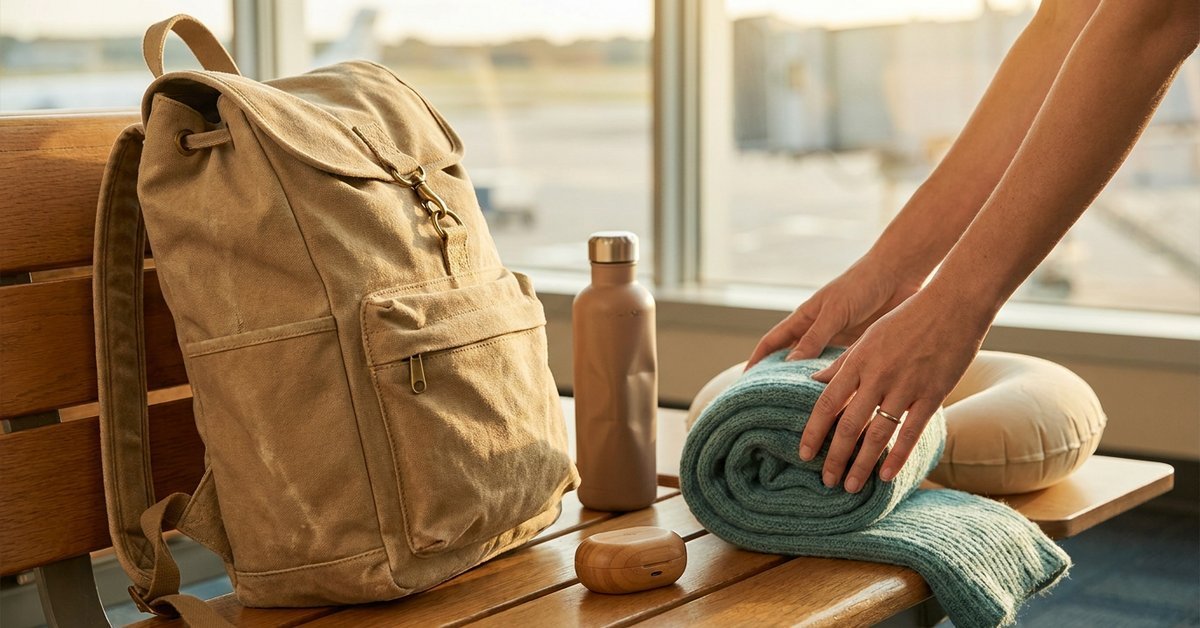
Put the water bottle, scarf, earbuds, eye mask, lip balm, and power bank on top or in outside pockets. Keep the change of clothes, the full medication pouch, and the pillow for landing day at the bottom. For more on what can and cannot come through the checkpoint, a guide to carry-on rules for beginners is coming soon, along with travel gadgets under $30 for solo travelers. Until then, the full carry-on packing hub has every guide in one place.
One woman in an r/AskWomen thread built her own mini emergency kit instead of paying $20 for a ready-made one filled with things she already owned: bandaids, a safety pin, boob tape, Benadryl, clear nail polish for runs and small breaks, floss, a toothbrush and toothpaste, and tweezers. It came in handy in Europe and earned its place on her long flights. A small bag, packed on purpose, carries you the whole way.
Found this helpful? Pin this guide so you can come back to it anytime.
Frequently Asked Questions
What are the most important long flight essentials?
Medications, a power bank, compression socks, an empty water bottle, a warm layer, lip balm and eye drops, sleep gear, and one change of clothes. Pack them in your personal item, since it is the only bag that stays under your seat for the whole flight.
Can I bring a power bank on a long flight?
Yes, in your carry-on or personal item only. FAA rules ban spare lithium batteries from checked bags and limit each rechargeable battery to 100 watt hours. If your carry-on is gate-checked, remove the power bank and keep it with you, and check your airline for stricter limits.
Do I need compression socks for a long flight?
Not everyone does, but anyone traveling more than 4 hours can be at risk for blood clots, according to the CDC. It recommends moving your legs often, and mentions graduated compression stockings for people at increased risk after talking with a doctor. Ask yours before the trip.
Is it normal to feel anxious about packing for a long-haul flight?
Yes, and a two-layer personal item takes most of the stress away. Put first-hour items like water, a scarf, and earbuds on top, and landing items like a change of clothes at the bottom. Once the essentials sit within reach, the rest of the flight asks very little of you.
What long flight essentials should a woman pack in her personal item?
Beyond the basics, pack a large scarf that doubles as a blanket, a dry-air kit with lip balm and moisturizer, and a small emergency kit with bandaids, a safety pin, floss, and tweezers. One traveler built hers instead of paying $20 for a ready-made version.