This post contains affiliate links. If you book or buy through them, I may earn a small commission at no extra cost to you. I only recommend things I would genuinely use myself.
Reasons to travel alone tend to surface right around the moment a group trip keeps not happening. One single mom of four teenagers had talked about a real family trip for five years running, without ever pulling it off. With her 40th birthday coming up, she decided this had to be the year, but stretching a tight budget to cover five people during the most expensive travel week of the year turned into a real math problem, not just a wish.
The short version: The best reasons to travel alone are not about avoiding people, they are about removing the scheduling, budget, and consensus problems that keep a trip stuck on the back burner. Confidence builds the same way it does anywhere: one small proof at a time that you can handle what you were worried about.

Save this for later
You will want this again. Pin it to your planning board so it is one tap away when you need it.
Pin it for laterWhat actually counts as a confidence-boosting reason to travel alone?
A confidence-boosting reason to travel alone is one that proves a specific fear was smaller than it felt, not just a nice feeling about independence in general. Booking your own hotel, navigating a foreign transit system, or eating alone in public each target a distinct worry, and clearing each one is what actually builds confidence, not the trip as a whole.
Why does it matter to separate a group trip from a solo one for this purpose? Because a companion absorbs the small decisions and small fears a solo trip forces you to handle yourself, which is exactly the part that builds something a group trip cannot.
10 confidence-boosting reasons to travel alone at least once
The 10 reasons split into practical proof points and emotional ones, and most women notice the practical wins first. None of them require an expensive destination or a long trip to count.
The practical proof points
1. You prove you can navigate an unfamiliar transit system without anyone else’s help. 2. You learn your actual travel budget instead of a group-negotiated compromise. 3. You build a real skill for reading a map, a schedule, or a menu in another language under mild pressure. 4. You discover how you personally handle a travel hiccup, a delay, a wrong turn, a closed restaurant, with no one else to lean on. 5. You find out exactly how much travel insurance and planning you actually need, not what a group assumes you need.
The reasons that change how you see yourself
6. You get an entire trip built around only your own preferences, with no compromise. 7. You prove to yourself that being alone in public does not mean being unsafe. 8. You come home with a specific memory that belongs entirely to you. 9. You stop waiting for someone else’s schedule to finally line up with yours. 10. You carry the proof of every one of these into the next decision that feels too big to make alone.
The habit that makes going alone feel normal instead of radical
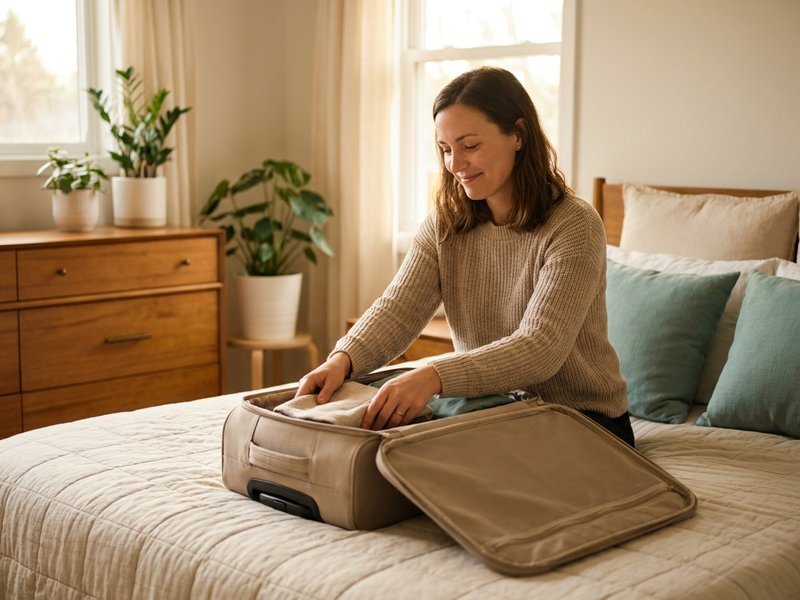
Going alone stops feeling radical once it becomes a repeated arrangement instead of a one-time exception. One married mother of two started solo traveling about four years ago once she realized waiting on her husband was not going to work. He hates flying and only wants to travel once a year at most, so they settled into an arrangement: he stays home with the kids and she goes on her own trips three to four times a year. She still gets a little thrill packing her own bag and answering to nobody but herself.
Is the stranger-danger fear about solo travel actually backed by data?
Not really, and the real crime data undercuts the fear most solo travel advice assumes. One widely cited breakdown of a recent year’s homicide statistics found that 13,789, or 78%, of murder victims were male, compared with 3,849, or 22%, female, out of 17,713 total recorded murders. Stranger-perpetrated killings followed the same pattern, with 21% of male victims and 12% of female victims killed by someone they did not know.
What does that actually mean for a solo trip? Most women who are murdered are killed by someone they know and trust, commonly a partner, not by a stranger encountered while traveling alone. The fear that keeps many women from booking the trip is pointed at the wrong risk.
What one small win from going alone can look like
One mother of two, juggling a full-time job and a house, no longer has the bandwidth to actively chase new credit card sign-up bonuses, so she just spends down what she already built: close to 1,000,000 points sitting across two rewards programs. Did she wait until she had enough for a big redemption? No, last month she finally cashed some in for three free hotel nights over Christmas week. She is not opening new cards or chasing every transfer partner, she is just working through the pile she already has, one trip at a time, and it still got her family a free Christmas trip.

For the safety planning that makes a first solo trip feel less daunting, this site’s roundup of the best travel insurance for solo female travelers covers what an actual policy should include. Every guide in this series lives on the Solo Female Travel hub.
The two things worth doing before any solo trip
Two free steps cover most of the practical safety worry before a first solo trip, regardless of destination. The U.S. State Department’s Smart Traveler Enrollment Program registers your trip with the nearest embassy, so someone official knows where you are supposed to be if plans go badly wrong. Does health prep matter as much as location prep? Yes, and the CDC’s travel health pages list destination-specific guidance before you book anything else.
What if the fear is not about safety at all?
Is it still worth going if the fear is loneliness, not danger? Yes, and it is worth naming the difference before you book, since the trip that fixes a safety worry looks different from the one that fixes a loneliness worry. Most first-time solo travelers find the loneliness fear fades within the first day or two, once the logistics of the trip take up the mental space the worry used to occupy.
The bottom line on reasons to travel alone
None of these 10 reasons require waiting for a group trip to finally line up. Each one targets a specific fear, the budget, the navigation, the safety worry, and clears it with actual proof instead of a pep talk. The crime data backs up what women who already travel alone regularly have found firsthand: the risk was never as large as it felt, and the confidence it builds carries into everything else.
Found this helpful? Pin this guide so you can come back to it anytime.
Frequently Asked Questions
What is the single best reason to travel alone at least once?
Proving you can handle a specific fear, a foreign transit system, eating alone in public, a travel hiccup, matters more than any general feeling about independence. That one cleared fear becomes proof you can handle the next thing that feels too big.
Is solo travel actually dangerous for women?
Crime data does not really support that fear. Out of 17,713 recorded murders in one widely cited breakdown, 78% of victims were male, and most female murder victims knew their killer rather than being harmed by a stranger while traveling alone.
Do I need a big budget to try traveling alone?
No. A short, inexpensive solo trip still delivers the same confidence-building proof as an expensive one, since the point is clearing a specific fear, not the size of the destination. Many women start with a single weekend close to home.
How do I get my family on board with a solo trip?
Frame it as a repeated arrangement rather than a one-time exception, the way some couples split solo and family trips across the year. Naming it as a regular plan rather than a special request tends to make it easier for a partner to actually support.