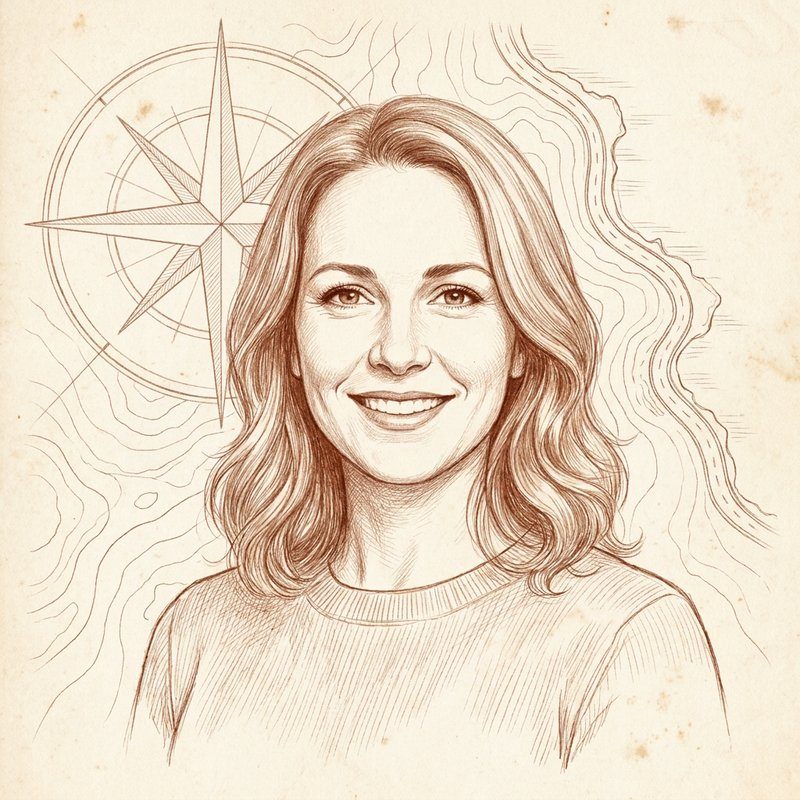
Iceland has held the top spot on the Global Peace Index for 19 consecutive years, and it answers a much bigger question. The safest places for solo female travelers share one boring backbone: buses that run after dark, restaurants that seat one guest without comment, and an emergency number you can dial in English. One woman in a r/solotravel thread had a palace guard sort through her laundry bag in front of a crowd of tourists, and still calls that night a favorite. The twelve countries below deliver that backbone on one income.
The short version: The safest places for solo female travelers in 2026 are Iceland, Japan, Singapore, Portugal, Slovenia, Ireland, Austria, Denmark, the Netherlands, New Zealand, Taiwan, and Canada. All twelve share reliable late-night transit, low street crime, English signage, and a culture where a woman eating dinner alone draws no attention.

Save this for later
You will want this again. Pin it to your planning board so it is one tap away when you need it.
Pin it for laterWhat actually makes a place safe for a woman traveling alone?
A destination is safe for a woman alone when four ordinary systems work at once: transit that runs late, streets that stay populated after dinner, staff who speak enough English to help, and an emergency service that answers. Crime statistics matter, and they are the layer most roundups stop at. The layers underneath decide how your Tuesday night actually goes.
Think of it as safety layering, the same idea as dressing for cold weather. No single item keeps you warm. A well-lit metro station, a hostel with a 24-hour desk, a SIM card that works on arrival, and a restaurant culture that seats solo diners each remove one decision from a tired evening. Remove enough decisions and the trip stops feeling like a test.
Is solo travel actually a fringe thing, or is the industry built for you now? The market answers that. The U.S. solo travel market was valued at 94.88 billion dollars in 2024 and is projected to grow at a 12.4% compound annual rate, which is why hotel loyalty programs, insurance underwriters, and tour operators now price products around one traveler instead of a couple. You are not an edge case to be accommodated. You are the customer.
How I picked these 12 safest places for solo female travelers
Every destination on this list had to clear five specific tests, not a general reputation for being nice. I ordered them the way a first-time solo traveler actually meets a country: at the airport at 10 p.m., not on a rankings table.
- Transit after 10 p.m. A published night service on the route between the main airport and the city center, so a delayed flight does not become a 60 dollar taxi negotiation.
- Solo dining is normal. Counter seating, single-portion menus, or a strong takeaway culture, so eating alone costs you nothing socially.
- English works in an emergency. Police, hospitals, and pharmacies handle English, verified against the country pages on OSAC, the U.S. State Department’s security advisory service.
- No standing government warning. Nothing above a routine advisory on the UK Foreign Office travel advice pages, which publish the same risk picture in plainer language.
- Reachable on one income. A realistic 7-day trip lands under 2,000 dollars from a U.S. hub in shoulder season, flights included.
Two things I deliberately did not use: Instagram popularity, and any list that ranks a country without saying what it measured. A place can be statistically safe and still exhausting for a woman alone if nothing is open and nobody speaks to you.
Three countries where traveling alone feels completely ordinary
Iceland, Japan, and Singapore are the three places where nobody registers that you are on your own. That is the quality worth paying for on a first trip, and it is not the same thing as a low crime rate.
Iceland
Iceland has ranked first on the Global Peace Index for 19 years in a row, the longest unbroken run of any country. Practically, that means a woman walking back to her guesthouse in Reykjavik at midnight in June is walking in daylight, because summer nights barely darken. English is near universal. The catch is money: Iceland is the most expensive country on this list, and a week runs closer to 2,500 dollars than 1,500.
Japan
Japan solves the two problems that make solo trips lonely: eating and moving. Ramen counters, conveyor sushi, and department store food halls are built for one person, and the rail network runs to the minute. Women-only train cars operate during rush hour in Tokyo and Osaka. What surprises first-timers is how little English appears outside the big stations, so download offline maps before you land.
Singapore
Singapore is the easiest long-haul arrival in Asia for a woman alone. English is an official language, the MRT runs until roughly midnight, and hawker centres serve a full meal for 5 to 8 Singapore dollars, which keeps the food budget honest in an otherwise expensive city. Three days here also works as a soft landing before a harder destination, which is how many women use it.
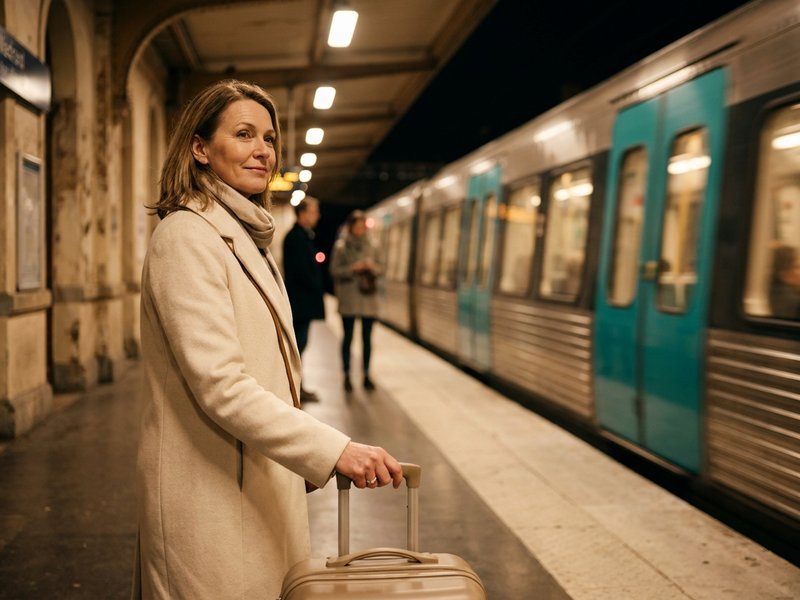
Three European trips that stretch one paycheck
Portugal, Slovenia, and Ireland deliver the safety of Western Europe at a cost that fits a one-income travel fund. Each one also has a compact geography, so you are not paying for internal flights.
Portugal
Lisbon and Porto both run late metro or bus service, hostels here are unusually good for women over 35, and a plate of grilled fish with wine still lands under 15 euros away from the tourist strips. Pickpocketing on the Lisbon tram 28 is the one real risk, and it is a bag problem rather than a personal safety problem. A crossbody bag worn in front solves most of it.
Slovenia
Slovenia is the quiet answer for a woman who wants mountains and lakes without New Zealand’s flight time. Ljubljana’s old town is pedestrianized and small enough to cross in 20 minutes, buses reach Lake Bled in about 90 minutes, and English is standard among anyone under 50. It is also the cheapest country in this section, with guesthouses from 60 euros.
Ireland
Ireland removes the language barrier entirely, which matters more than women expect on a first trip. Pub culture makes a solo woman at the bar unremarkable, and intercity buses reach Galway, Cork, and Killarney without a rental car. Budget honestly for weather rather than crime: rain gear you would actually wear is the real packing decision here.
Three cities where eating dinner alone is completely normal
Vienna, Copenhagen, and Utrecht are the three cities where the table-for-one moment stops being a moment. For a lot of women that single detail decides whether a trip feels free or exposed.
- Vienna, Austria. Coffee house culture is built on people sitting alone for hours with a book. The U-Bahn runs all night on Fridays and Saturdays, and a museum-heavy week costs less than most capitals because the transit pass covers everything.
- Copenhagen, Denmark. Cycling infrastructure means you are rarely walking an empty street, and the harbour baths and food halls are full of solo locals. Denmark is expensive, so this is the trip where a 52-week savings habit pays for itself.
- Utrecht, Netherlands. Half the price of Amsterdam, 30 minutes away by train, with canal-side cafes where nobody looks twice at one chair. It is the better base for a first trip to the Netherlands, and the trains from Schiphol run every 15 minutes.
Three bigger trips worth the long flight
New Zealand, Taiwan, and Canada are the picks for a milestone trip, the one you fund over 12 months rather than 12 weeks. Each of the three has infrastructure built for independent travelers, so the extra flight time buys you a genuinely easier trip on the ground.
- New Zealand. The most developed backpacker and camper network in the world, which means solo women are routine rather than remarkable. Intercity buses connect everything, and hostels here skew older than in Europe.
- Taiwan. Convenience stores on every corner double as safe stops at any hour, the high speed rail crosses the island in 90 minutes, and night markets make solo eating the default. Taipei is also one of the cheapest safe capitals in Asia.
- Canada. The lowest-friction international trip from the United States: no long-haul flight, no visa, no adapter, and healthcare that will treat you. Vancouver, Montreal, and Halifax all work as a first solo city.
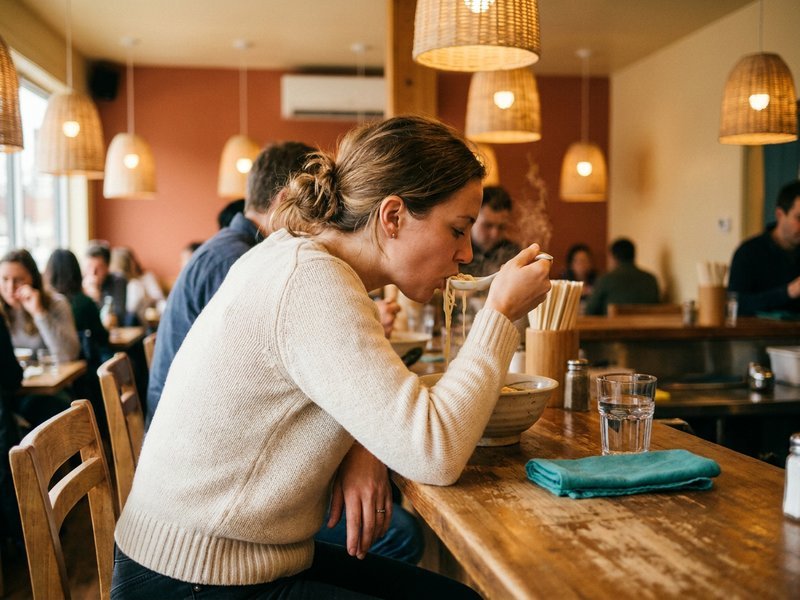
What “safe” does not mean
None of these twelve places will give you a trip without a bad hour. A safe destination lowers the odds that a bad hour turns into a bad trip. That is the honest promise, and it is worth more than a rankings badge.
Petty theft exists in all twelve. Lisbon, Copenhagen, and Vienna all have pickpockets working the tourist routes. What differs is what happens next: whether the police report takes 20 minutes or two days, whether your bank reaches you, whether a pharmacy will help at 9 p.m. Those are the things a stable country gets right, and they are the things you actually need.
What about the discomfort that has nothing to do with crime? That one is real too, and it passes. The woman from the r/solotravel thread who had her laundry sorted by a palace guard wanted the ground to swallow her whole. She was almost 40, traveling alone, and mortified in front of a crowd. The same guard later pointed her toward a local African nightclub, where she watched her first Afrodance battle and danced through the night. Embarrassment is not danger, and the two get confused constantly.
What a first solo trip to these places actually costs
A 7-day trip to the cheapest destinations here runs 1,200 to 1,600 dollars from a U.S. hub in shoulder season, and Iceland or Copenhagen runs 2,200 to 2,800 dollars. Shoulder season means April to May or September to October, when flights drop 25 to 40 percent and the same city stays fully open.
How do you get there on one income? Not in one push. A named travel fund with an automatic transfer does the work quietly, which is exactly the mechanism behind the $5,000 travel fund plan: 417 dollars a month for 12 months, moved on payday before you can spend it. For a 1,400 dollar trip to Slovenia or Taiwan, that same math is 117 dollars a month.
Insurance is the one line most first-timers underbook. If you are over 50, the coverage questions change enough that they need their own answer, which is what the travel insurance guide for solo travelers over 50 works through. A younger traveler on a 1,400 dollar trip should still expect 45 to 70 dollars for a policy that covers medical evacuation.
The safety system that works in all twelve places
One system, set up before you fly, covers every destination on this list. It takes about 40 minutes and removes the decisions you are worst at making when tired.
- Book the first two nights before departure, near the main transit line, with a 24-hour desk. Nights three onward can stay flexible.
- Buy an eSIM before you leave so you have data at passport control, not after finding wifi.
- Screenshot your accommodation address in the local language, plus the local emergency number. In the EU it is 112. In Japan it is 110 for police, and in New Zealand and Canada it is 111 and 911.
- Split your money: one card in your bag, one card and 100 dollars in cash in your room.
- Check the current advisory for your country on the CDC travel notices page for health requirements, and the government advisory pages above for security.
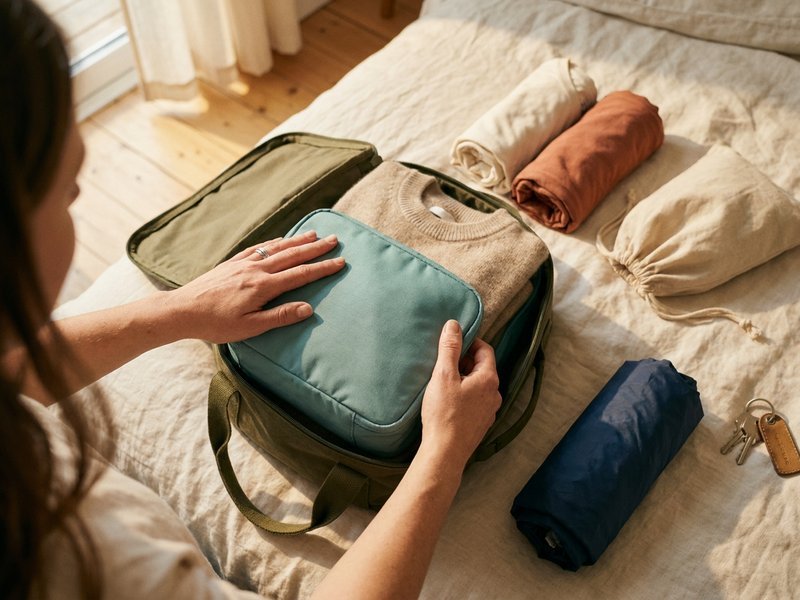
Packing carries its own safety weight, mostly because a bag you cannot carry up stairs alone changes what you are willing to do. The carry-on packing list exists for that reason. If you would rather start with a domestic trip and build confidence first, the best U.S. cities for solo women covers the same ground closer to home.
Is it normal to still feel scared after picking a safe country?
Yes, and the fear usually has nothing to do with the destination. Women who research obsessively and still feel sick the week before departure are not reading a warning sign. They are reading the size of the change.
A woman in the same r/solotravel thread went to Zihuatanejo alone after leaving a partner of 10.5 years, to a place the two of them used to visit together. She walked past a house with an apartment for rent and her first thought was that she could never move to Mexico by herself, that she did not even know how to ask the rent price in Spanish.
Something in my gut argued back, telling me I could actually do this alone.
A woman writing in r/solotravel, three years after signing the lease. She is fluent in Spanish now, and she dances salsa.
That gut argument is the part no destination list can hand you, and it is also the part that shows up on its own once you are standing there. If you want the full pre-trip walkthrough rather than a destination shortlist, the beginner’s guide to solo female travel covers the booking order, and the solo female travel guides hub holds the rest. The insurance comparison for solo female travelers is coming next.
One woman who writes about affording solo travel keeps a 52-week savings chart printed where she can see it. Week one she puts away 1 dollar, week two 2 dollars, and the largest single week is 52 dollars at the very end. By December she has 1,300 dollars sitting there for travel, and she has done it four years running. She describes it as a holiday present she gave herself twelve months earlier.
Twelve destinations, one savings chart, and about 40 minutes of setup. You are not waiting for permission or for a braver version of yourself to show up. You are funding a trip, and the countries above are already built for the woman who takes it alone.
Found this helpful? Pin this guide so you can come back to it anytime.
Frequently Asked Questions
What is the safest country in the world for a woman traveling alone?
Iceland, which has ranked first on the Global Peace Index for 19 consecutive years. For a solo woman that translates into near-universal English, daylight through most of the summer night, and low street crime. The trade-off is cost: a week in Iceland runs closer to 2,500 dollars than 1,500.
How do I choose between these 12 destinations for a first trip?
Start with flight time and language. If you want the shortest leap, choose Canada or Ireland. If you want the biggest change with the least friction, choose Japan or Singapore. If your travel fund is the constraint, Slovenia, Portugal, and Taiwan deliver the same safety layers for the lowest weekly cost.
Are these the safest places for solo female travelers on one income?
Yes, with the cost spread noted. Slovenia, Portugal, Taiwan, and Canada all land a realistic 7-day trip between 1,200 and 1,600 dollars from a U.S. hub in shoulder season. Iceland, Denmark, and New Zealand cost roughly twice that, so they suit a 12-month savings plan rather than a quick booking.
Is it normal to be scared before a first solo trip?
It is normal, and it is not a signal to cancel. Women who research a destination thoroughly and still feel sick the week before are usually reacting to the size of the change, not to real risk. Booking the first two nights and setting up an eSIM removes most of the anxiety that is actually solvable.