This post contains no affiliate links. If that ever changes, I will say so right here, at the top of the post. Every destination below comes from a woman who actually slowed down there, not a highlight reel.
Slow travel destinations work best when you stay in one place long enough to stop rushing, not when you cram more stops into the same week. For years, one woman told herself her husband skipped every trip because of money. He earned about $280,000 at the time and still said they could not afford to travel. He earns about a third of that now and gives her the exact same line, and that is when it clicked for her: it was never really about the numbers.
The short version: Slow travel destinations are places that reward staying put for a week or more instead of rushing through a checklist, from walkable small towns to coastal spots with one good routine. Pick one base, unpack once, and let the pace itself become the point of the trip.
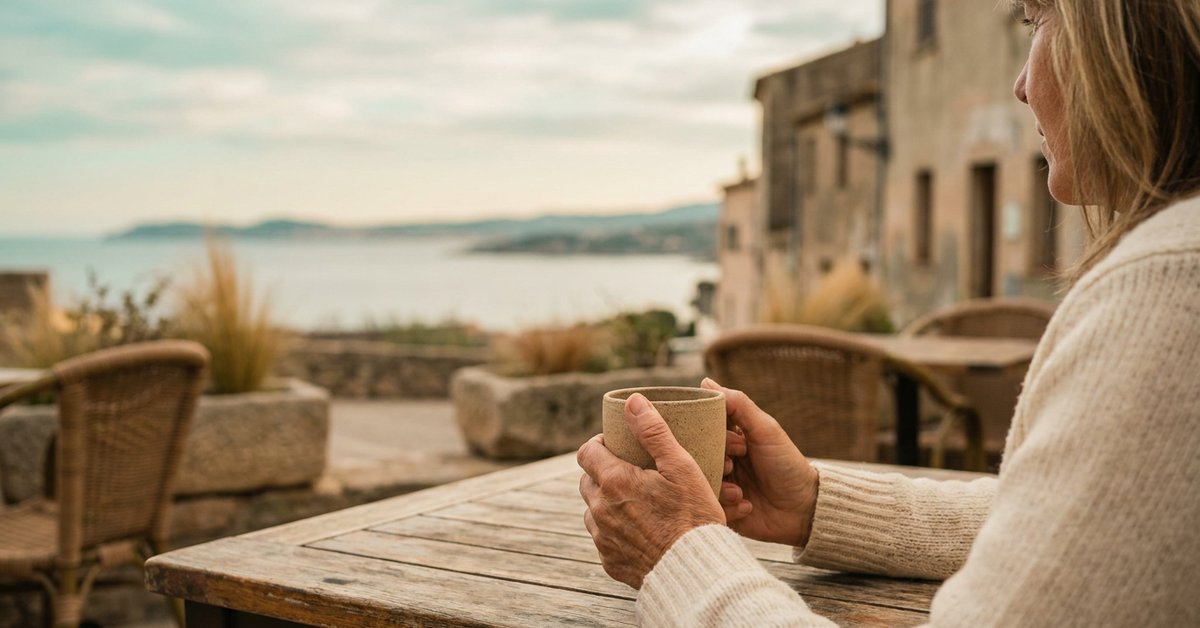

Save this for later
You will want this again. Pin it to your planning board so it is one tap away when you need it.
Pin it for laterWhat Makes a Destination Good for Slow Travel
A good slow travel destination is walkable, has a real routine you can settle into, and does not require checking out after 2 or 3 nights. Think a weekly market, a favorite cafe you visit more than once, a walking route that becomes familiar by day 4. Does that rule out cities entirely? No, but the busiest capital cities usually work better for a fast first trip than a slow one.
8 Slow Travel Destinations Worth a Full Week
The 8 destination types are small coastal towns, walkable historic centers, lake regions, countryside farm stays, small wine regions, mountain valley towns, riverside cities with one main district, and island towns with a single main street. Each one rewards staying still more than moving fast.
Coastal and Lake Towns
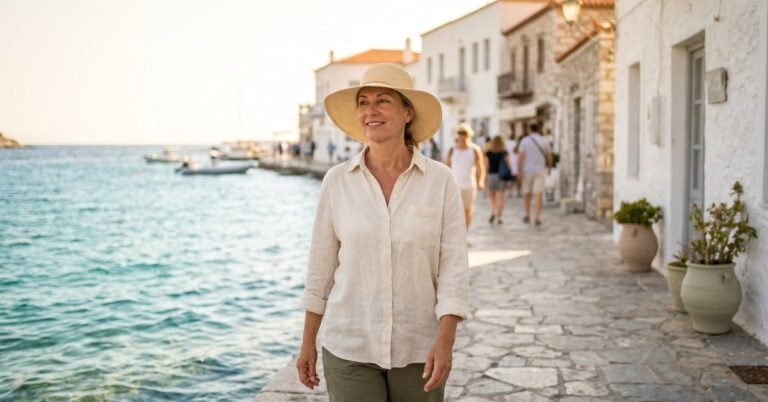
- Small coastal towns – one beach, one boardwalk, a rhythm that repeats by day 3
- Lake regions – a single lakefront town beats hopping between 3 different lakes
- Island towns with one main street – the smaller the island, the easier the slow-down
Inland and Countryside Bases
- Walkable historic centers – a town small enough to learn every street by week’s end
- Countryside farm stays – one property, one host, a schedule built around meals
- Small wine regions – a handful of villages close enough to visit without repacking
- Mountain valley towns – a single valley, a slower pace forced by the terrain itself
- Riverside cities with one main district – pick the walkable core, skip the sprawl
Is It Normal to Feel Nervous About Eating Alone at a Slow Pace?
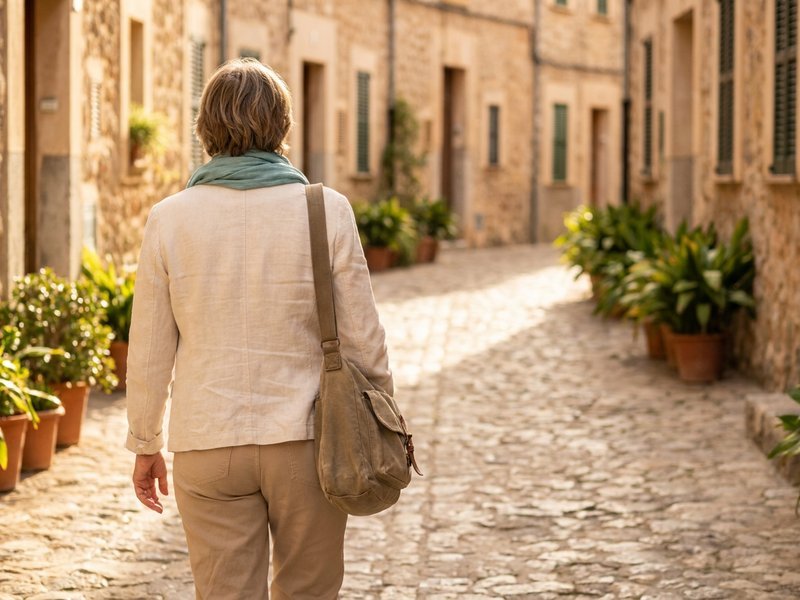
Yes, and it usually fades within the first week of a slow trip, faster than it would on a rushed one. One woman booked her first solo trip to Florence at 55, scared and excited in equal measure. The part that made her stomach flip was not the flight or the hotel. It was walking into a nice restaurant and asking for a table for one at dinner. She was perfectly confident sitting at a bar back home, but reserving a table for herself felt like a different kind of brave. She decided to do it anyway.
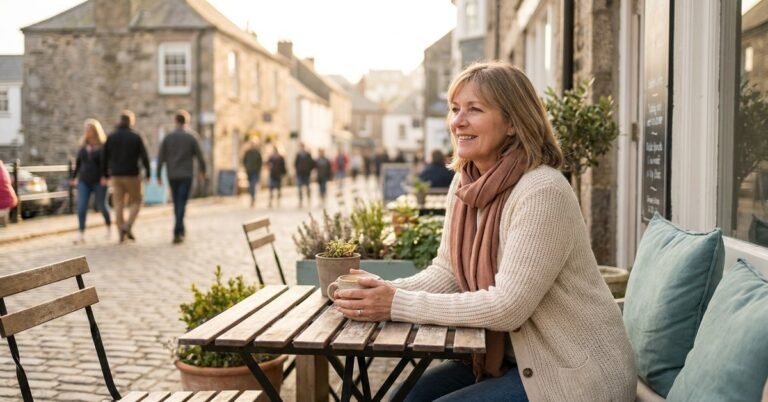
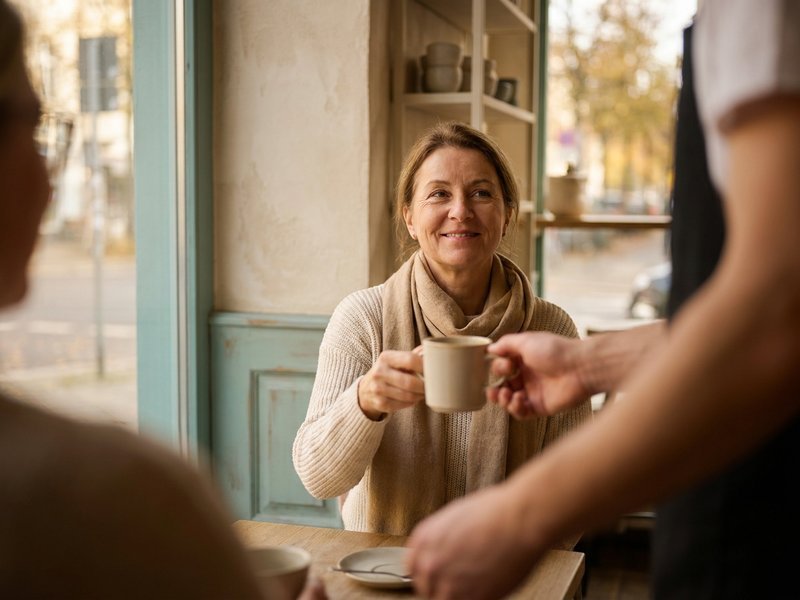
What changes on a slow trip specifically? By the third or fourth visit to the same cafe, the staff start to recognize you, and a table for one stops feeling like a spotlight. That familiarity is one of the real advantages of staying put.
Is Traveling Alone to a Quiet Destination Actually Safe?
Yes, and a quieter destination often has less to worry about than a dense tourist hub, not more. The oft-repeated marketing claim that 84% of solo travelers are women gets less solid the closer it is examined. One detailed rebuttal pointed out the internal math does not add up: given the U.S. gender split is roughly 50/50, a claim that “72% of women represent 35% of the population” cannot be reconciled with a separate industry figure claiming only 1 in 6 people has ever taken a solo holiday. Another commenter defended the number by noting solo women disproportionately book group tours rather than traveling fully alone, which could inflate a tour company’s own count.
What does that mean for choosing a destination? Marketing statistics about who travels solo are shakier than they look, so pick a slow destination based on your own comfort and research, not a viral number.
How Long Should a Slow Travel Trip Actually Be?
A week is the minimum for slow travel to actually feel different from a regular fast-paced trip, and 10 to 14 days lets the routine fully settle in. Shorter stays tend to default back into sightseeing mode out of habit. If you only have 4 or 5 days, pick just one of the destination types above rather than trying to slow down and see multiple places in the same trip.
Budgeting for a Slower Trip
Slow travel often costs less per day than a fast trip, since one home base means fewer flights, fewer hotel changes, and cooking some meals yourself. Doesn’t more time away just mean more total spending? Not necessarily, since the daily rate drops even as the trip stretches longer. A weekly apartment rental frequently beats a week of nightly hotel rates, and a single train ticket in beats renting a car you barely use once you stop moving around. If you are building toward your first slow trip, our beginner’s guide to solo travel over 50 covers the full budget breakdown by trip style.
Preparing for a Longer, Slower Stay Abroad
A stay of a week or more abroad is worth a little extra preparation, even in a quiet, low-key destination. Check the U.S. Department of State’s travel advisory levels for your destination before booking, and register longer trips with the State Department’s free STEP program. Review CDC travel health guidance a few weeks out too, since recommendations vary by country and change more often than people expect. Does a slow trip need more prep than a fast one? Not really, just the same due diligence stretched over a longer stay.

For Every Guide in This Series
Two starting points come up again and again for women planning their first slower solo trip: our guide to women-only tours built for solo travelers over 50, and our breakdown of travel insurance for solo female travelers over 50. For every guide in this series, our solo travel over 50 hub collects them in one place.
At 49, one woman’s husband died, and she closed the day care that had supported both of them for the previous decade. She moved to a farm certain she wanted a petting zoo, with no real idea what she was doing. That lasted a year before she shut it down. From there she started a cat rescue, went back to school, and became a paramedic, all while her daughter covered the farm animals on shift days. An injury eventually forced her off the ambulance, so she turned fully toward the rescue instead. It now spays and neuters more than 2,500 cats a year, with 14 employees. All of it happened after she turned 50. A slow trip will not rebuild a life the way she rebuilt hers, but the same willingness to sit still with an uncertain plan is exactly what makes both work.
Found this helpful? Pin this guide so you can come back to it anytime.
Frequently Asked Questions
What are the best slow travel destinations for beginners?
Small coastal towns, walkable historic centers, and lake regions work well for a first slow trip, since each offers a routine you can settle into within a few days. Pick one base for the full stay instead of splitting the trip across multiple towns.
How long should a slow travel trip be?
A week is the minimum for slow travel to feel different from a regular fast-paced trip, and 10 to 14 days lets a real routine settle in. Shorter trips tend to default back into sightseeing mode out of old habit, even with the best of intentions going in.
Is it normal to feel nervous eating alone on a slow trip?
Yes, and it usually fades faster on a slow trip than a fast one. Returning to the same cafe or restaurant several times builds familiarity with the staff, which makes a table for one feel ordinary rather than exposed by the end of the first week.
Are slow travel destinations cheaper than a typical vacation?
Often, yes. One home base means fewer flights and hotel changes, and a weekly apartment rental frequently costs less per night than a week of hotel stays. Cooking some meals yourself and skipping a rental car add up over a longer stay.
What is the best slow travel destination for solo women over 50?
Walkable small towns and coastal spots tend to work best, since less time is spent navigating and more time settling into a routine. The quieter the destination, the faster it usually starts to feel familiar rather than foreign, and familiarity is most of what makes solo travel feel comfortable after the first week.