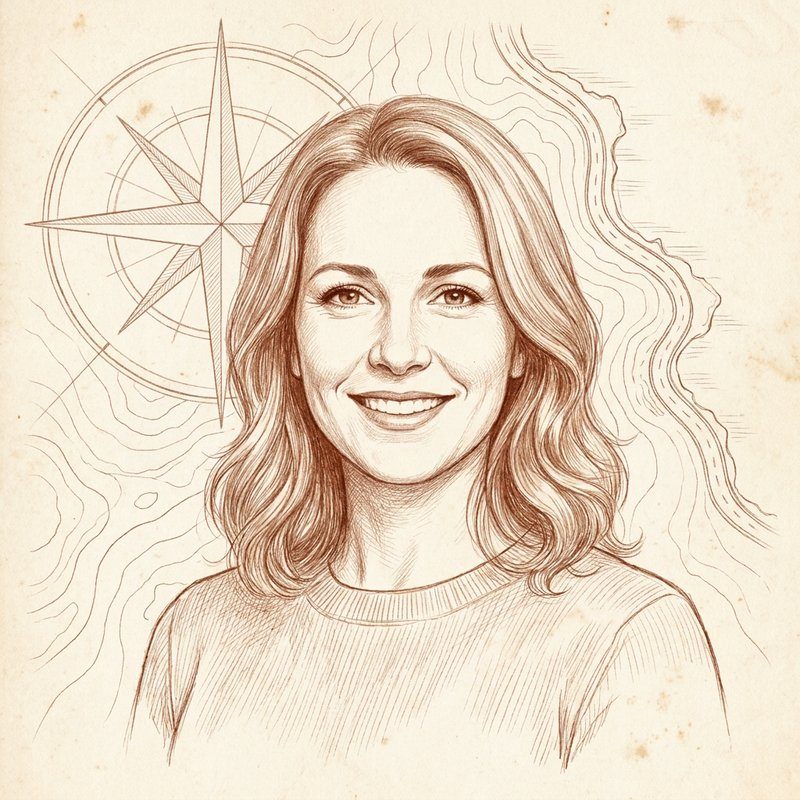
A solo trip does not automatically spark reinvention, most solo trips are just a getaway taken alone. Solo travel reinvention comes from a specific kind of experience inside the trip: one that removes a habit you didn’t know you were leaning on. One traveler retired at 50 and decided to sell or donate almost everything she owned so she could solo travel full time, something she had never done once in a lifetime of solo trips. These 9 experiences, not destinations, tend to do the real work.
The short version: Solo travel reinvention comes from specific experiences, not the trip itself: an open-ended booking, a spending number you set yourself, a land tour instead of a cruise, a shared hostel room, and saying yes to a stranger. Each one tends to loosen a rule you didn’t know you were following.

Save this for later
You will want this again. Pin it to your planning board so it is one tap away when you need it.
Pin it for laterWhat Makes Solo Travel Reinvention Actually Work?
A solo trip sparks reinvention when it forces one specific decision you’d normally hand off to someone else, a schedule, a budget, a room, a plan, and you make it alone and survive it. A week in a resort with a full itinerary booked in advance doesn’t ask anything new of you. A trip with no return date, no travel companion to defer to, and no one checking whether you’re on track does.
Why does that distinction matter more than the destination? Because reinvention isn’t about seeing a new place, it’s about discovering which of your old rules were actually yours and which ones you never tested. Solo travel is one of the few situations left in most women’s lives with almost no other adult watching or weighing in.
3 Experiences That Break an Old Habit
The first three experiences target a habit you’ve likely followed for years without ever asking why. Booking a trip with no return date, even a short one, means you make the “when do I go home” decision instead of a calendar making it for you. Setting your own daily spending number instead of borrowing someone else’s rule of thumb is the second. Choosing a land tour over a cruise on purpose is the third, its own small act of reinvention that trades the illusion of built-in company for a format that actually produces conversation.
What “your own spending number” actually looks like
What does that actually look like in practice? In an r/AskWomenOver50 thread, one traveler who has gone mostly solo for over 17 years, across roughly 80 countries, refused to name a single correct monthly budget: some travelers call $5,000 a month bare-bones, others live well on under $1,000, and both are right for the woman living on that number. She now spends less time in big cities and favors quieter places instead.
3 Experiences That Test Your Comfort Zone
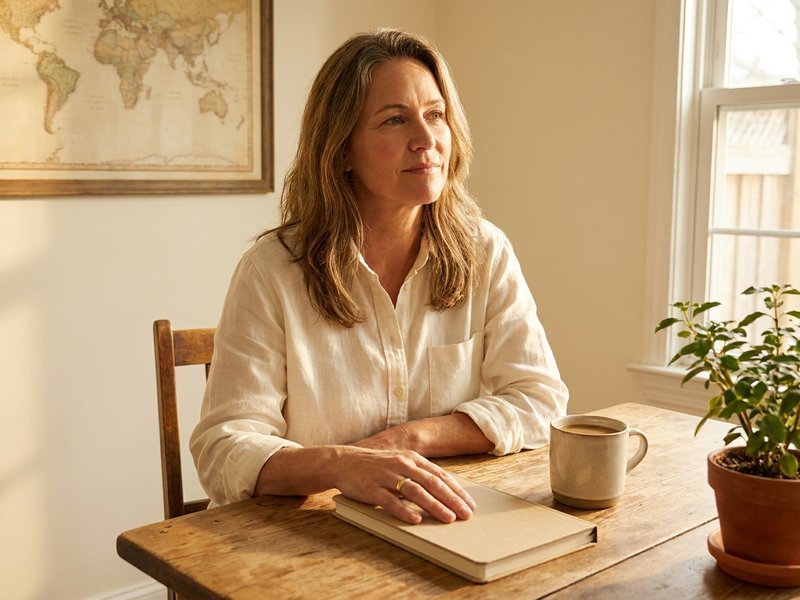
The next three ask you to sit inside a level of discomfort most women arrange their whole lives to avoid. Booking a shared hostel dorm well past the age most guidebooks assume you’ve aged out of it is the fourth. Eating a full meal alone in public, at a real table, without a phone as a prop, is the fifth. Saying yes to an invitation from a stranger instead of politely declining out of habit is the sixth, and it’s often the one that pays off the most.
Does saying yes actually work out for women traveling alone? One woman took her first solo trip at 50, to Colombia, expecting to keep mostly to herself since she describes herself as a little socially awkward. Connection found her anyway: a conversation with a couple on a rural bus, then an evening out with her hotel owner’s daughter. She came home, in her own words, inspired by how lucky she felt to see new places and meet new people, not because she chased company but because she didn’t rule it out.
3 Experiences That Carry the Lesson Home
The last three are less about the trip and more about what you do with it afterward. Protecting one unstructured day on the trip the same way you’d protect a promotion at work, no plans and no guilt about it, is the seventh. Giving yourself one full day with zero plans and treating the boredom as information instead of a problem to fix is the eighth. Writing down, before you unpack, the one specific thing that felt different about you on this trip, not the sights you saw, is the ninth.
Why does protecting unstructured time matter this much? One woman in the Reinvention community learned the same lesson at her desk, not on a trip, but the mechanism is identical. She hit her financial number in her early forties and nearly quit outright, until a friend talked her into easing up instead of walking away completely. She started protecting her time on purpose, delegating what she could and refusing to work after hours. It felt risky at first. A decade later, she says she’s had more recognition since she stopped grinding than she ever had while grinding, and the same math applies to one unplanned day mid-trip: protecting it on purpose, not just letting it happen by accident, is what makes it count.
Is a Cruise Really the Easiest Way to Meet People Solo?
Not necessarily, and one direct comparison suggests the opposite of the common advice. Cruises are often pitched to solo travelers over 50 as the easy, built-in social option. In an r/solotravel thread for older travelers, one traveler in her sixties spent 7 days on an Alaska cruise followed by 6 days on a land tour and reported the surprising result herself: “Surprisingly, I found people on cruises less likely to talk with a solo person as opposed to land tours.” She kept planning solo trips afterward, but said she’d think twice before cruising alone again.
Why scale changes the outcome
Her explanation was scale: with so many passengers aboard a cruise ship, everyone tends to do their own thing instead of talking to a stranger traveling alone.
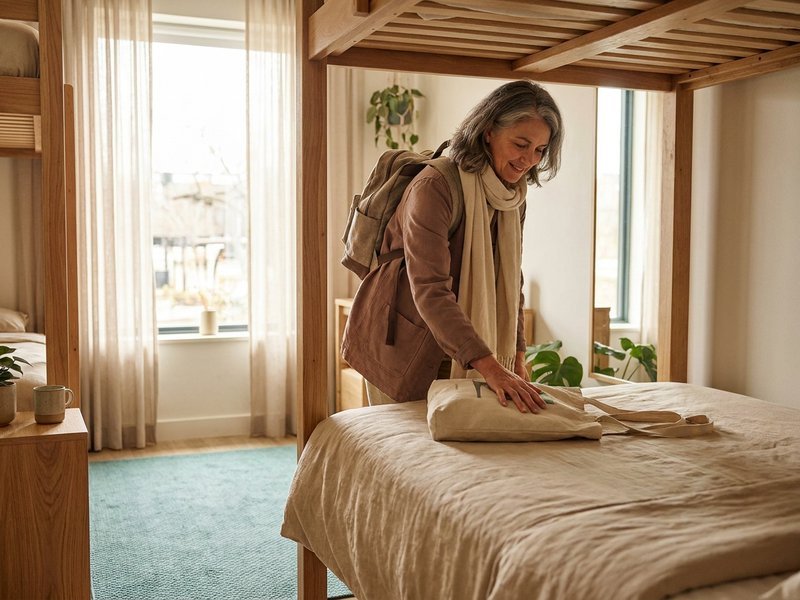
What does that mean for picking your own first trip? If meeting people is actually the goal, a smaller-group land tour or a multi-stop itinerary with shared transport tends to force more real conversation than a ship carrying thousands of strangers doing their own thing in parallel. If a hostel dorm sounds appealing but unfamiliar, Hostelling International USA lists vetted hostels by city and age range, which is a low-risk way to try experience four on this list.
What Long-Term Solo Travelers Actually Spend Each Month
There is no single correct monthly number for solo travel over 50, and long-term travelers actively resist giving one. Ranges reported by women who’ve done this for years run from under $1,000 a month to $5,000 a month, with pace and destination doing most of the work: slower travel in lower-cost regions pulls the number down, while frequent moves between expensive cities push it up.
So how do you actually pick your own number instead of copying someone else’s? Start with one month of real spending at home, subtract rent or a mortgage, and use that as your floor, since housing is the one cost solo travel usually replaces rather than adds. Before any trip lasting more than a couple of weeks, the CDC Travelers’ Health site is worth ten minutes for destination-specific health guidance most women skip until something goes wrong.

What If You’re Nervous About Your First Solo Trip at This Age?
Is the nervousness a sign you’re not ready? Not usually, it’s a sign the trip is actually going to ask something of you, which is the whole point. Start with the experience on this list that feels smallest, often eating alone in public or booking one night in a hostel close to home first, rather than the biggest leap on the list. Confidence tends to arrive after the first small proof, not before it.
Start With One Experience, Not the Whole List
You don’t need all 9 experiences on one trip, you need one you haven’t tried yet. Pick the one that makes you the most nervous to even imagine, that’s usually the one carrying the actual lesson. The woman who took her first solo trip at 50 didn’t plan to make a friend on a rural bus in Colombia, she just left room for it to happen by saying yes once instead of declining out of habit. That’s the whole method: one trip, one experience you haven’t let yourself have yet, and room enough to notice what it changes.
For the reading that goes deeper on the identity side of this same rebuild, this site’s roundup of the best books on reinventing yourself after 40 covers what actually helps. Every guide in this series lives on the Reinventing After 40 hub, and the Solo Travel Over 50 hub covers the practical side of a first trip.
Found this helpful? Pin this guide so you can come back to it anytime.
Found this helpful? Pin this guide so you can come back to it anytime.
Frequently Asked Questions
Does solo travel actually help with reinvention after 50?
It can, but the trip itself isn’t what does it, specific experiences inside the trip are: an open-ended booking, a self-set budget, a shared room, or saying yes to a stranger. Any one of these tends to loosen a habit or rule you didn’t realize you were still following at home before you left.
Is it too late to try solo hostel travel in your 60s or 70s?
No. Solo travelers well into their 60s and 70s book shared hostel dorms regularly, often because the cost and the built-in conversation both work in their favor. Age is not the barrier most guidebooks quietly assume it to be for a woman traveling on her own.
Are cruises or land tours better for meeting people while traveling solo?
One direct comparison from a solo traveler who tried both back to back found land tours produced more real conversation than a cruise, where thousands of passengers tend to keep to themselves. A smaller-group land tour or shared transport tends to force more interaction than a large ship does.
How much does solo travel over 50 actually cost per month?
There’s no single correct number. Long-term solo travelers describe real budgets ranging from under $1,000 a month to $5,000 a month, both workable depending on destination, pace, and comfort level. Set your own number instead of borrowing someone else’s rule of thumb for it.