This post contains no affiliate links. If that ever changes, I will say so right here, at the top of the post. Every item below comes from someone who actually carried it and reported back, and nothing here is recommended on a spec sheet alone.
The travel essentials for women that survive past 40 have one thing in common: you can carry all of them yourself, up a flight of stairs, at the end of a long day. That single test throws out more gear than any weight limit does. A woman in an r/HerOneBag thread about testing carry-on life at 52 put it plainly, and she is under 5 feet tall, so the rule decides what comes and what stays more reliably than any packing list she has tried.
The short version: Pick travel essentials by one rule: can you carry everything you brought without help. That gives you a bag under 40 liters, 3 to 5 solid-colour outfit pieces, one pair of shoes you have already walked 5 miles in, and a small health kit. Everything else is optional.

Save this for later
You will want this again. Pin it to your planning board so it is one tap away when you need it.
Pin it for laterWhat counts as a travel essential after 40?
An essential is something whose absence would change your day, not something that would merely be nice to have in it. Everything else is cargo you are paying for in shoulder strain and airport minutes.
The mechanism is compounding weight. Each item you add is small on the kitchen floor and heavy at hour six, because the cost is not the ounce, it is the ounce multiplied by every stair, platform, and cobbled street between the airport and the room. What feels like nothing at home is what makes you take a taxi you did not plan to take.
Does age actually change the list? Some of it. Sleep gets more fragile, feet get less forgiving, and the tolerance for standing in a queue holding 30 pounds drops. The list below is built for that, not around it.
The test every item here had to pass
Each item on this list had to clear four checks before it earned a place. I would rather name the filter than hand you a list and hope you trust it.
- Carried, not reviewed. Someone used it on a real trip and reported what went wrong, not just what worked.
- Under one hand. You can lift it, carry it, and repack it without a second person.
- Two jobs minimum. A scarf that is also a blanket, a bag that is also a daypack, a shoe that walks and dines.
- Replaceable on the road. If it vanishes, you can buy a version of it in most cities within a day.
15 travel essentials for women who carry their own bag
Take the first group as non-negotiable, and treat the other two as the ones you edit down. Fifteen items is the ceiling for a carry-on trip, not a shopping list to complete.
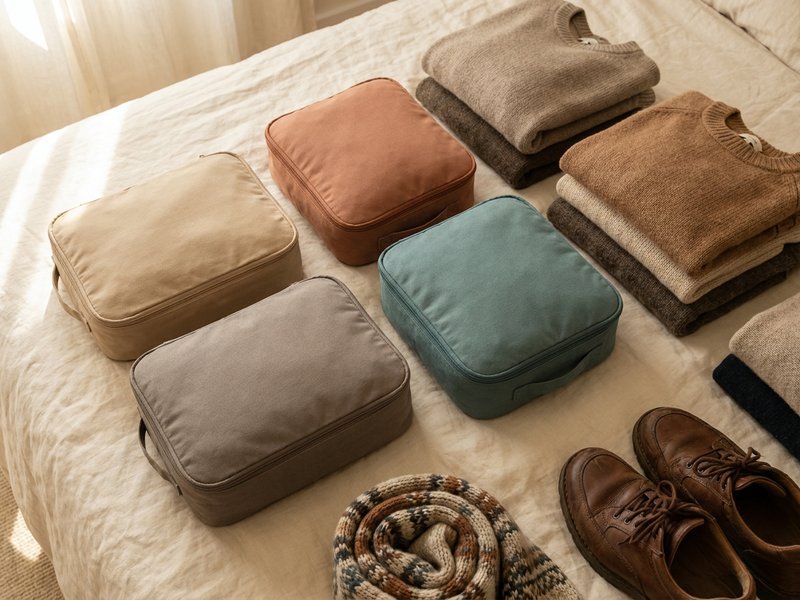
The bag and the four things that go in first
- 1. A 35 to 40 liter bag with a zip top. Front-loading beats top-loading every time you need one thing in a hurry.
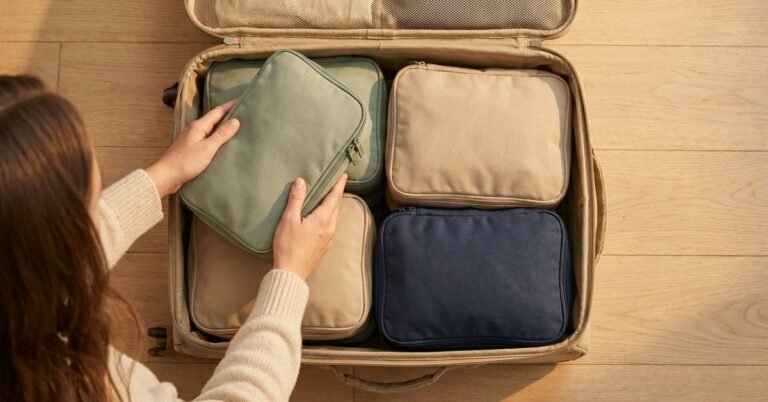
- 2. Three or four solid-colour packing cubes. Solid colours, no labels, so you sort by sight and not by reading.
- 3. One pair of walking shoes you have already put 5 miles on. New shoes on day one is the single most common trip-ruining mistake.
- 4. A day bag that folds flat. It lives inside the main bag until you land, then carries water, layers, and a phone.
- 5. A small health kit. The CDC’s pack-smart list is the sane starting point, and it costs about $20 to assemble.
Comfort on the move
- 6. A large scarf or wrap. Blanket on the plane, cover in a church, pillow on a train, shade at 2pm.
- 7. Merino layers, 2 or 3 pieces. They go 3 or 4 wears before they need washing, which is the whole argument.
- 8. One dress or one pair of trousers that reads as dressed-up. It turns 4 travel outfits into 6.
- 9. A refillable water bottle, 500 to 750ml. Empty through security, full for the next 8 hours.
- 10. Earplugs and an eye mask. Two items, under $15 together, and they protect the thing that goes first after 40.
The small things that prevent a bad day
- 11. A power bank under 100 watt-hours. The FAA requires lithium batteries in the cabin, never in checked bags.
- 12. A universal adapter with USB ports. One plug instead of three, and it charges the phone and the bank at once.
- 13. A second payment card kept somewhere separate. Not a spare copy, a different card in a different pocket.
- 14. A zip pouch for the day’s cash and one card. The main wallet stays in the room; the pouch goes out.
- 15. A laundry sheet supply for 3 washes. Flat, light, and the reason 7 pieces of clothing covers 3 weeks.
Where does the paperwork sit in all this? In one place you never move. Passport, a copy, and one card live in the same pocket the entire trip, and the federal travel-abroad checklist covers what to arrange before you leave. The full carry-on packing list takes this down to the item-by-item version.
The one bag that keeps coming back
A bag earns its place by how it sits on your body over hours, not by its capacity number. Two bags at the same 35 liters can feel 10 pounds apart depending on how the weight rides.
The same r/HerOneBag thread has a woman describing the Cotopaxi Allpa 35L carrying everything she owns through Europe and South America for weeks at a stretch, across the last 10 years. It is cut like a hiking pack, so she has walked miles in it without her shoulders complaining, and the pockets sit where her hands already reach. The zip top matters more than it sounds, because it is how she gets at anything she needs at the last second. She is on the shorter side and it looks oversized on her, and it is still the bag she would grab if she had 15 minutes to evacuate.
Notice what she rated it on: shoulder comfort over miles, pocket position, and access speed. Not litres, not a brand, and not a review score. When the roundups arrive, the best carry-on luggage for women is where the model-by-model comparison will live.
What the packing lists do not price
Every one-bag list is also a laundry schedule, and almost none of them say so. The bag you carry and the washing you do are the same decision seen from two ends.
A frequent traveler on r/delta put the trade in one line: you can travel for a month in Southeast Asia with a small backpack, and then you are doing laundry in a sink 3 times a week. That is roughly 12 sink washes on a 4-week trip. Each one costs an evening hour plus a drying window, which means the light bag bought you airport ease and sold you 12 evenings.
Is that a bad trade? Not automatically. It is a trade, and the honest version of a packing list shows both halves so you can pick on purpose. Seven pieces plus 3 sink washes a week is a real choice; 7 pieces and no plan is how people end up buying a shirt in a foreign supermarket at 9pm.
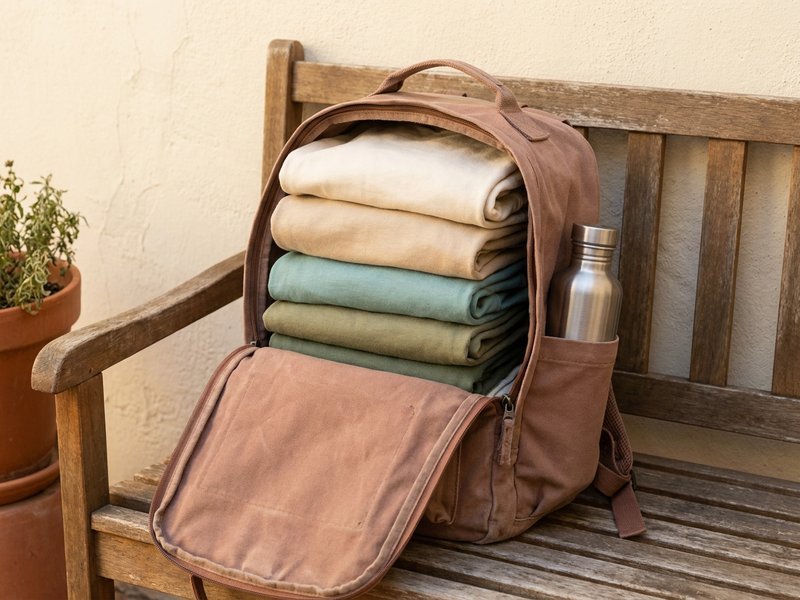
Why “under 7 kg” is the wrong target for most of us
Weight targets circulating online are set by people whose frame and trip look nothing like yours, and chasing them produces guilt rather than a lighter bag. The number that matters is the one your own shoulders sign off on.
Another woman in that thread owns the Osprey Fairview 40 liter and has been honest about struggling with it. Fitting everything in is hard, and once it is full the bag is heavy in a way she did not plan for. She has come round to accepting she will pay for overweight items rather than keep chasing the numbers other people quote, because getting down to them feels out of reach. The advice she found most useful came from the shorter women in the thread, who are carrying the same load on a smaller frame.
That is the correction this whole category needs. A 7 kg target set by someone 5’10” with a 3-day trip is not a target for a 5’2″ woman going 3 weeks. Set yours by the stair test instead: pack the bag, carry it up two flights, and take out whatever made you stop on the landing.
What actually changes after 40
Three things shift, and each one has a specific item attached to it. Naming them beats a general instruction to pack lighter.
- Sleep gets easier to break. Earplugs, an eye mask, and a room away from the lift, in that order of cost.
- Feet stop forgiving. One broken-in pair beats two new ones, and a second insole weighs almost nothing.
- Recovery takes longer. Build one slow morning into every 3 travel days, which costs nothing and saves the second week.
What about medication and prescriptions? Keep them in the cabin bag in their original packaging, and carry enough for the trip plus 3 extra days in case a flight moves. That single habit turns a delayed connection from a problem into an inconvenience.
How to test your kit before the trip
Run one loaded rehearsal at home, 7 days out, and edit from what that tells you. A packed bag on a bed proves nothing; a packed bag on your back for 40 minutes proves everything.
- Day 7 before. Pack it fully, including the toiletries and the water bottle full.
- Walk 20 minutes. Around the block, up a hill if you have one, and up two flights of stairs at the end.
- Remove 3 things. Not 1. Three, chosen while your shoulders still remember.
- Wear the shoes for a full day. Indoors is fine. Blisters show up by hour 5.
- Repack it from empty. If you cannot do it in 10 minutes, you have too many small items.
Planning a first trip rather than a tenth? The order of operations is different, and the 15 best destinations for a first solo trip pairs the destination choice with how much gear it actually demands.
Is it worth buying new gear for one trip?
Buy two things at most, and make one of them the bag. Everything else on this list you can borrow, substitute, or buy for under $20 at the destination.
The reason is amortisation. A $200 bag used on 8 trips costs $25 a trip; a $60 packing set used once costs $60. Spend where the item will be carried on your body for hundreds of hours, and redirect the rest into the trip itself.
What if the trip is 4 months away and you are still building the fund? Then the gear waits. The carry-on packing guides hub holds everything published so far, and the beginner’s guide to solo female travel covers the sequencing when money and confidence are both still being built.
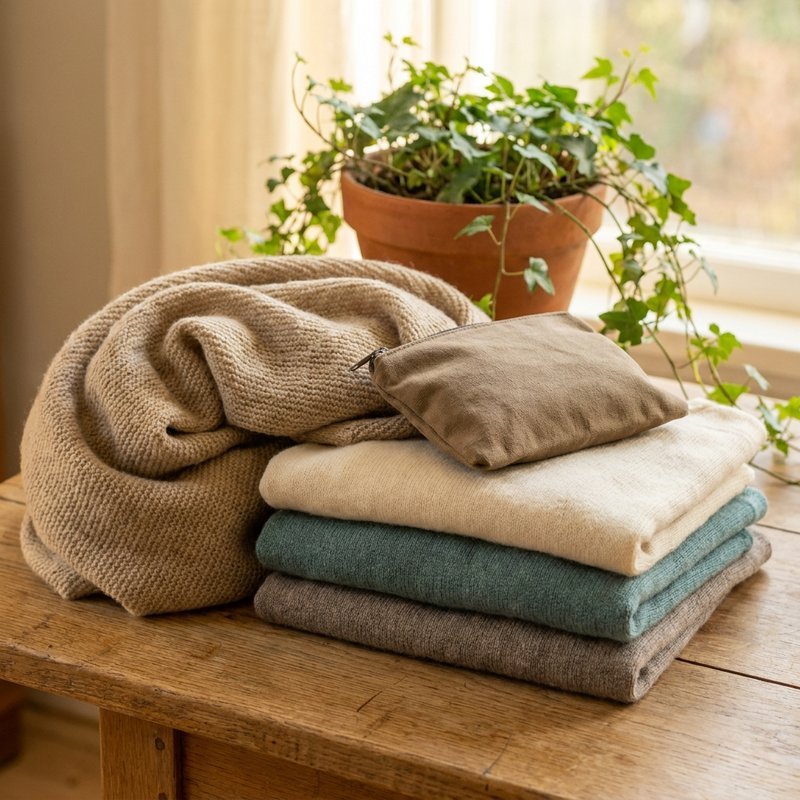
The woman from the top of this piece lives out of a bag by plane and public transit for around 7 months of the year, and drives the rest. Her husband travels with her, and she holds to the rule anyway: she can carry every bag she brought without help. Under 5 feet tall, that rule has decided what comes and what stays more reliably than any packing list she has tried.
That is the whole list in one sentence. Not the lightest bag, not the cleverest gear, just a kit you can pick up and walk away with. You are funding this trip, and you should not arrive at it already tired.
Found this helpful? Pin this guide so you can come back to it anytime.
Frequently Asked Questions
What are the most important travel essentials for women?
A 35 to 40 liter bag you can carry alone, 3 or 4 solid-colour packing cubes, one broken-in pair of walking shoes, a fold-flat day bag, and a small health kit. Those five cover the trip. Everything after them is comfort you edit down to what your shoulders agree to.
How do I pack carry-on only for a trip over a week?
Plan the laundry first, then the clothes. Seven pieces plus 3 sink washes a week covers 3 weeks comfortably. Choose merino or synthetic layers that go 3 or 4 wears, pack laundry sheets for 3 washes, and keep one dressier piece so the same outfits work for evenings.
What travel essentials matter more for women over 50?
Sleep and feet. Earplugs, an eye mask, and a room away from the lift protect the first; one broken-in pair of shoes and a spare insole protect the second. Add one slow morning every 3 travel days. None of it is expensive, and all of it decides how week two feels.
Do I need to buy new gear before my first trip?
Buy two things at most, and make one the bag. A $200 bag across 8 trips costs $25 a trip, while a packing set used once costs full price for one use. Borrow, substitute, or buy small items at the destination, and redirect the difference into the trip.
How heavy should my carry-on actually be?
Light enough to carry up two flights of stairs without stopping on the landing. Ignore the weight targets circulating online, because they are set by people with a different frame and a shorter trip. Pack it, walk it, and remove three things. That number is yours.