This post contains no affiliate links today. If that ever changes, I will say so right here, at the top of the post. Airline and airport rules quoted below come from the FAA and TSA and were current when this was written.
Packing cubes organization fits more into a bag by sizing the cubes to that bag, giving every category its own compartment, and compressing only the bulky layers. One mother in r/HerOneBag, planning just under 3 weeks in Japan with a 3-year-old and a 6-year-old, tried to fit all four of them into two 40L Osprey packs. Her husband’s CPAP machine tipped it past doable, so her 6-year-old got a small pink four-wheel suitcase. The family’s test pack ended up using only small and medium cubes.
The short version: Packing cubes organization works when the cubes fit your bag, each cube holds one category, and compression is saved for bulky layers only. Keep tech and liquids in their own small cubes you can pull out at security, and leave one cube empty for the trip home.

Save this for later
You will want this again. Pin it to your planning board so it is one tap away when you need it.
Pin it for laterWhat Packing Cubes Organization Actually Fixes
Packing cubes fix the rummaging, not the weight: they turn one big cavity into labeled drawers, so you pull out one cube instead of unpacking the whole bag. That is the mechanism behind every hack below. A bag packed loose shifts, spreads, and forces a full repack at every stop. A bag packed in cubes stays in the same shape from the first hotel to the last.
What cubes cannot do is make heavy things light. A cube of jeans weighs exactly what the jeans weigh. Keep that in mind at hack 5, where compression gets the most hype and the most misunderstanding. For the full list of what to bring in the first place, start with our carry-on packing list for women.
1. Size the Cubes to Your Bag, Not the Other Way Around
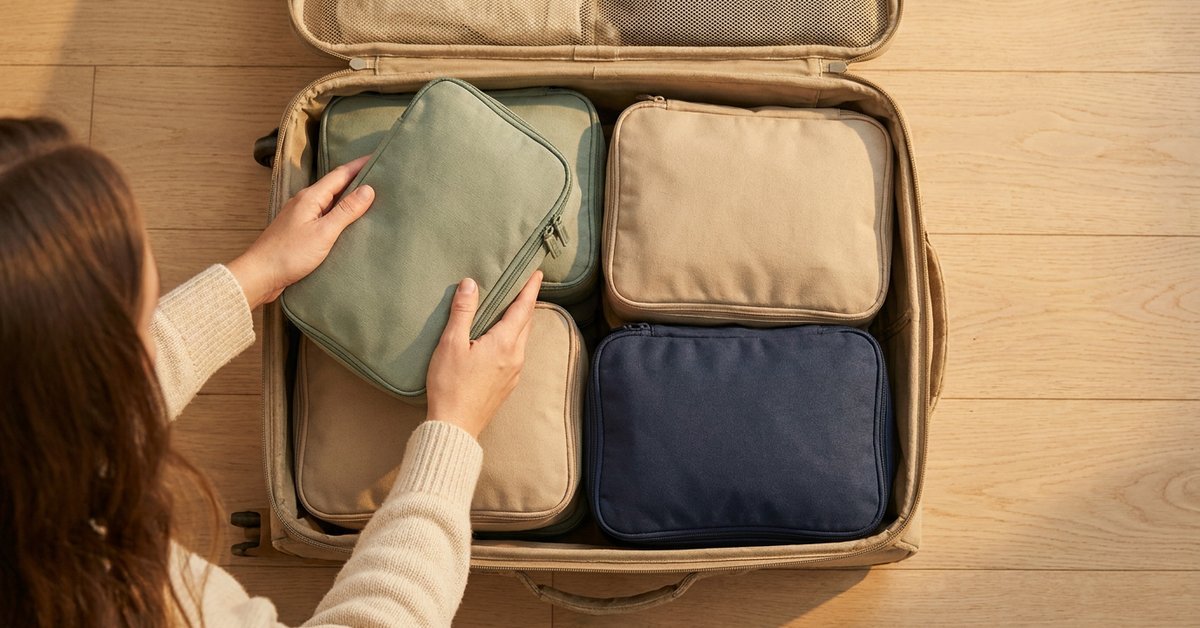
Buy or choose cubes after you know your bag’s interior, because a set of large cubes in a small bag leaves dead corners you can’t use. The Japan family above test-packed everything the weekend before the trip and discovered the large cubes never made the cut. Small and medium cubes tucked into the curves of a backpack in a way large ones couldn’t.
Not sure which sizes fit yours? Do a dry run on your own bag. Lay the empty cubes inside, close it, and see what gaps remain. In most carry-on backpacks, two medium cubes and two small cubes fill the space better than one large cube plus loose items.
2. One Cube per Category, Not One Cube per Day
Organize cubes by category, tops in one, bottoms in another, underwear and socks in a third, because category cubes adapt when plans change and outfit cubes don’t. A cube packed as “Tuesday’s outfit” falls apart the first time Tuesday turns rainy.
Is there ever a case for outfit cubes? Yes, on a short trip with fixed events. For a 3-day wedding weekend, packing one cube per event saves real time getting ready. For anything longer than 5 days, go back to categories.
3. Give Every Traveler Their Own Color
When you travel with kids, assign each person one cube color so anyone can find their own clothes without asking you. On a family trip, the parent usually becomes the human search engine. Color coding hands that job back to the kids.
Pair the colors with a simple rule: your cube, your job to repack it. Even a 6-year-old can zip a cube shut, and it turns packing from a chore you do alone into something the whole family does in 5 minutes before checkout.
Cubes have a limit with very small children, though. A parent of one in r/HerOneBag looked back on a toddler trip done carry-on only: “I made the mistake of trying to go with carry on so had case plus stroller plus baby in carrier plus personal item X 2.” Now that the airline charges for carry-ons anyway, that parent checks one bigger case and pulls it beside a small backpack. Color-coded cubes still keep that one case organized.
4. Roll the Soft Pieces, Fold the Structured Ones
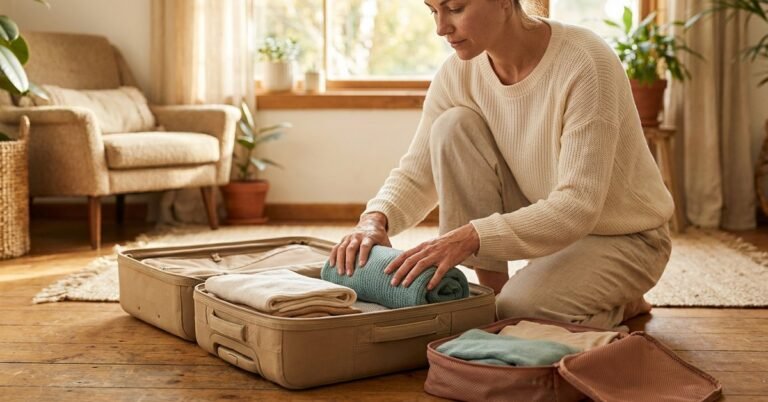
Roll knits, T-shirts, and leggings, and fold blazers, button-downs, and anything with a collar, because rolling saves space on stretchy fabric while folding keeps structure flat. The reason is the fabric itself. Knits are built from loops that stretch and spring back, so a roll never sets a crease, while woven fabric creases wherever it bends sharply, which is why a rolled blazer comes out lined along every turn.
Mixing both in one cube works well: lay folded pieces flat on the bottom and fit rolled pieces on top like logs. Which comes out first at the hotel? The rolled items, which are also the ones that wrinkle least.
5. Do Compression Cubes Actually Save Space?
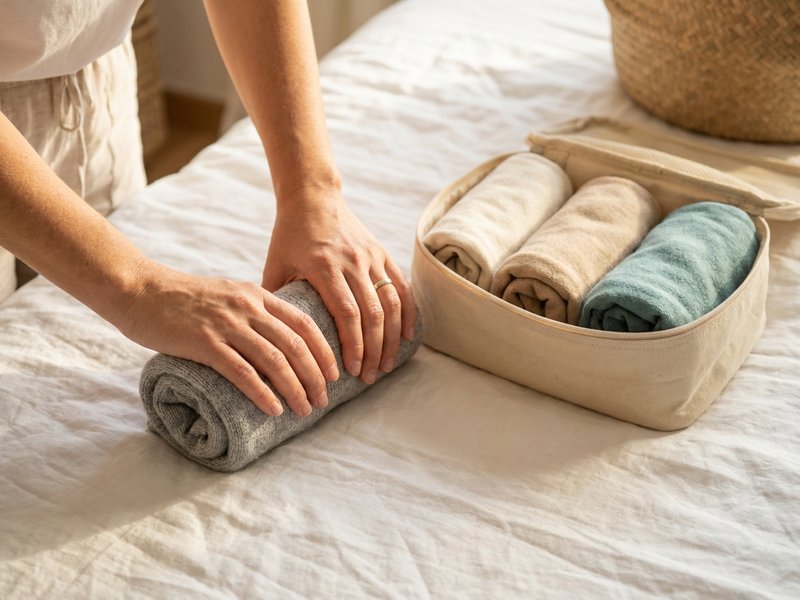
Yes for volume, no for weight: compression cubes squeeze air out of bulky clothes so they take less room, but every item weighs the same as before. That difference decides whether compression helps or hurts your trip.
Where Compression Earns Its Place
Sweaters, fleece, puffy jackets, and pajamas shrink the most, because they hold the most air. T-shirts and denim barely change. Use one compression cube for the bulky layers and regular cubes for everything else.
Where It Backfires
Free space tempts you to fill it, and weight is what your shoulders feel. One r/HerOneBag member logged the change across successive trips: 20 lbs in a duffel at the start, 15 lbs after switching to a hybrid bag, then 12 lbs on the next trip, which that traveler described as “super comfy.” If compression lets you pack more, check that you still want to carry more.
6. Put the Heaviest Cube Where the Weight Belongs
Place the heaviest cube near the wheels of a roller or flat against your spine in a backpack, because weight close to the pivot point is weight you barely notice. A heavy cube at the top of a roller makes it tip forward every time you stop. The same cube at the top of a backpack pulls you backward.
Which items make up the heavy group? Shoes, a toiletry cube, and denim, almost every time. Put them in first, closest to the wheels or your back, and stack the lighter clothing cubes on top.
7. Pack a First-Night Cube and Keep It on Top
Keep one small cube with sleepwear, fresh underwear, and tomorrow’s outfit on top of everything, so arriving late never means unpacking. After a long travel day, you open the bag, take out one cube, and go to sleep.
On a travel day with a connection, move this cube into your personal item. If your carry-on gets checked at the gate, or a missed connection strands you at an airport hotel, tonight’s clothes are still with you instead of under the plane.
8. Split the Suitcase Into Two Jobs
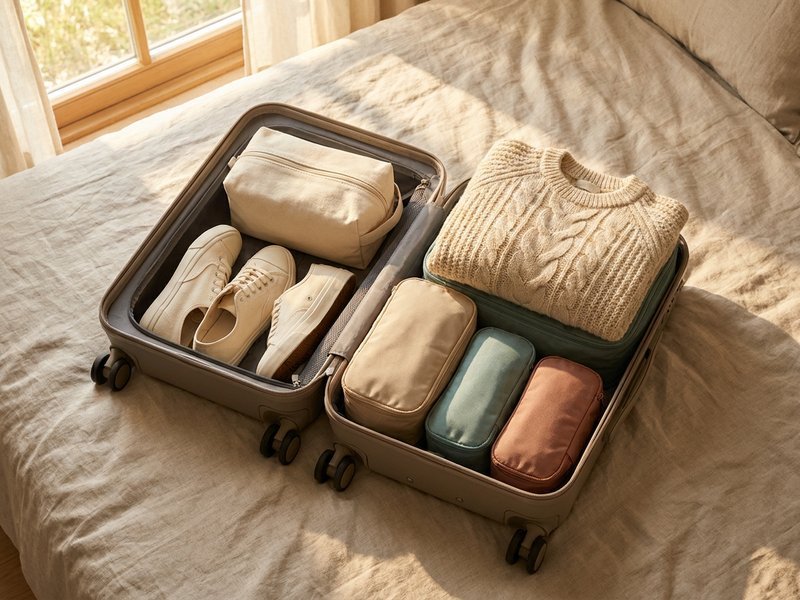
In a clamshell hard-shell carry-on, use one half for shoes and toiletries and the other half for clothing cubes, so heavy, awkward items never crush folded clothes. A frequent traveler in r/travel who packs carry-on only for about 10 days uses exactly this setup in a single Away hard-shell carry-on.
On one side go her toiletry bag, sneakers and flats, her laptop when she brings it, and a compression cube of bras and underwear. The other side holds one large and two medium packing cubes, with a light jacket or sweater slipped between the halves before zipping. After 10-ish years of work and leisure trips with this system, through sizes 12-16 and now 6-8, she has never run out of clean clothes. Want the same logic for a smaller bag? Our minimalist packing ideas for a carry-on apply it to one-bag trips.
9. Keep a Tech Cube in Your Personal Item
Put chargers, cables, and power banks in one small cube that lives in your personal item, because power banks are not allowed in checked bags. The FAA’s lithium battery rules require spare lithium batteries and power banks to travel in carry-on baggage only, and each rechargeable battery is limited to 100 watt hours.
Here is why the cube matters: if your roller gets checked at the gate, the FAA requires every spare battery and power bank to come out of that bag and stay with you in the cabin. A tech cube means you grab one pouch in five seconds instead of digging through the whole suitcase while the line waits behind you.
10. Make the Toiletry Cube Security-Ready
Pack liquids in one clear, quart-size cube that follows the TSA 3-1-1 rule, so it comes out at the checkpoint without opening anything else. Under the TSA liquids rule, each container holds 3.4 ounces (100 milliliters) or less, all containers fit in one quart-size bag, and each passenger gets one bag.
Keep that cube at the very top of your carry-on, or in an outside pocket, and everything else stays zipped. For what belongs inside it, see our list of toiletry bag essentials for stress-free travel.
11. Save One Empty Cube for the Trip Home
Pack one empty, lightweight cube folded flat, then use it for dirty laundry or anything you buy along the way. Dirty clothes stay separate from clean ones, and souvenirs get a home instead of forcing a repack on the last morning.
It also works as a spending rule. Decide before you leave that souvenirs only go in that one cube, and when it is full, the shopping is done. A mesh or thin nylon cube weighs almost nothing and folds to the size of a phone, so the rule costs you nothing to carry.
12. Unpack Cubes Straight Into the Drawer
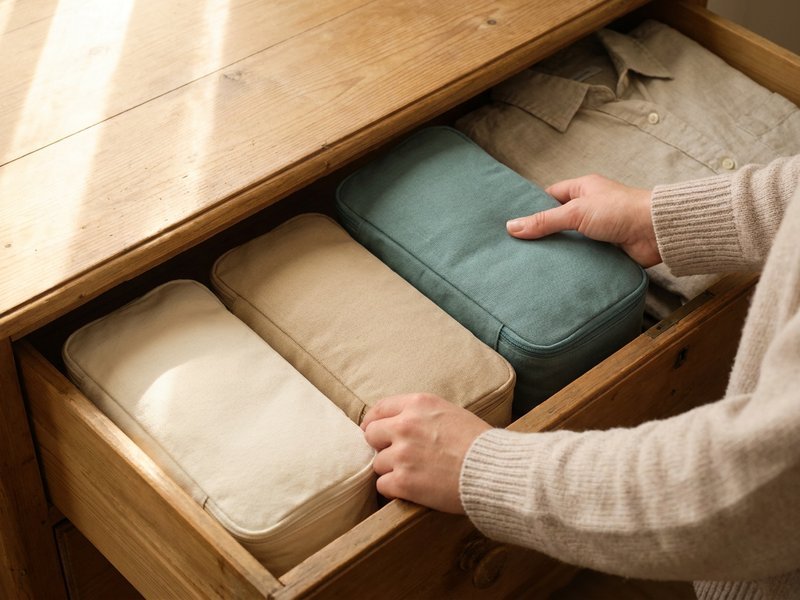
At a hotel where you stay 3 nights or more, set each cube in a drawer instead of unpacking it, so checking out takes 2 minutes of zipping. The categories you packed at home become your drawers on the road.
Cubes also shrink the decision load for women who find packing itself exhausting. In r/adhdwomen, one commenter tried the take-only-what-you-need approach several times and checked on return: “I really did use/wear everything (more or less).” The conclusion was a big suitcase without guilt, and a goal of simply not stressing when approaching hour 10 of packing. A fixed set of category cubes turns each repack into refilling the same drawers. For one-night stops, leave the cubes in the bag and pull out only the first-night cube from hack 7. Planning to buy new cubes for this system? A tested guide to the best packing cubes for organized travel is on the way, along with a step-by-step guide on how to use packing cubes on every trip. Until then, browse the full carry-on packing hub.
A single mom in r/HerOneBag whose kids are now 14, 18, and 23 made them responsible for their own luggage from about age 5, framing it as a big mission to guard their bags. It felt a little mean then. It paid off: on a recent 2 weeks in Europe, her boys carried one backpack each while she carried two personal items, and they now plan laundry night and carry her bag. Teach the system once, and it keeps paying you back on every trip after.
Found this helpful? Pin this guide so you can come back to it anytime.
Frequently Asked Questions
What is the best way to organize packing cubes?
Organize by category rather than by day: one cube for tops, one for bottoms, one for underwear and socks. Put the heaviest cube near the wheels or against your back, keep a first-night cube on top, and hold one empty cube in reserve for laundry.
How many packing cubes do I need for a carry-on?
Most carry-on backpacks fill well with two medium and two small cubes, plus a toiletry cube and a small tech cube. Test-pack your own bag before the trip, since one family planning 3 weeks in Japan found their large cubes never fit.
Do compression packing cubes make a bag heavier?
No, the cube itself adds little, but compression makes it easy to pack more, and more clothing means more weight. Compression reduces volume by pushing air out of bulky layers. Save it for sweaters and jackets, and watch the total weight you will carry.
Can I put a power bank in a packing cube in my checked bag?
No. FAA rules require spare lithium batteries and power banks to travel in carry-on bags only, and if your carry-on is checked at the gate, they must come out and stay with you. Keep them in a small tech cube inside your personal item.
Is packing cubes organization worth it for a single mom traveling with kids?
Yes. Giving each child their own cube color lets everyone find their own clothes and repack their own things. It also builds the habit early: one single mom who made her kids carry their own luggage from about age 5 now has teenagers who carry her bag.