This post contains no affiliate links today. If that ever changes, I will say so right here, at the top of the post. Every number below comes from a real solo trip, not a hypothetical.
How to pack light for a solo trip starts with accepting that less luggage means more freedom to move, not a deprivation. One woman’s solo round-the-world backpacking trip ran 15 months across 19 countries on about $20,000 total, moving mostly by bus and train with everything she owned on her own back. She traveled alone as a woman with no phone, since only flip phones existed then, and felt unsafe only a handful of times, getting herself out quickly each time.
The short version: How to pack light for a solo trip comes down to picking one bag size first, then building a repeating 5-day capsule wardrobe backward from that limit. Packing fewer “just in case” items also means fewer bags to watch, count, and carry alone through every station and hotel lobby.
How Light Should You Actually Pack for a Solo Trip?
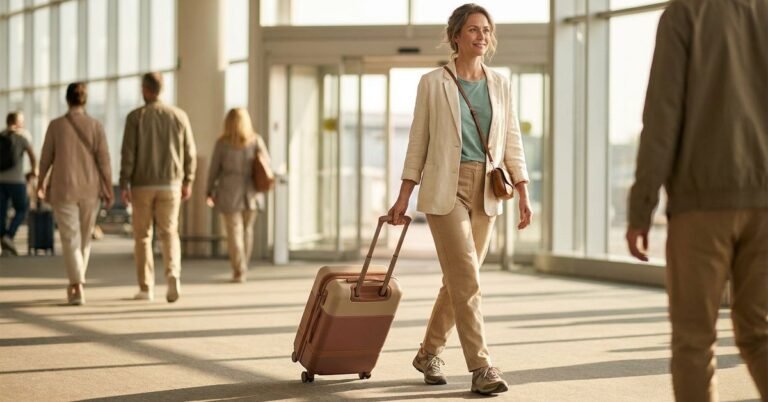
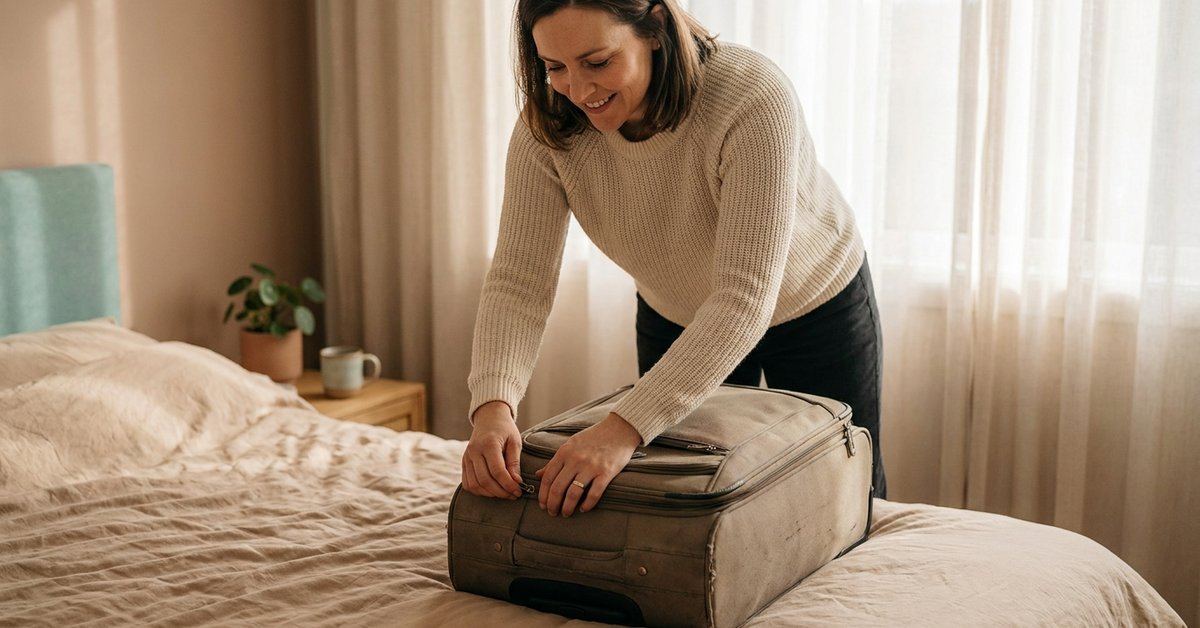
One carry-on in the 35 to 45 liter range, packed to about 15 pounds, is light enough to run for a connection, climb three flights of stairs with no elevator, and never check a bag on a solo trip of two to three weeks. Market researchers no longer treat solo female travel as a subplot of the wider travel industry; compiled industry data found 84% of solo travelers identify as female, with 54% of women planning to travel alone within the year. For a woman planning her first solo trip, that number reframes an isolating decision: she is joining an established majority, not inventing a niche.
Why Traveling Lighter Keeps You Safer Alone
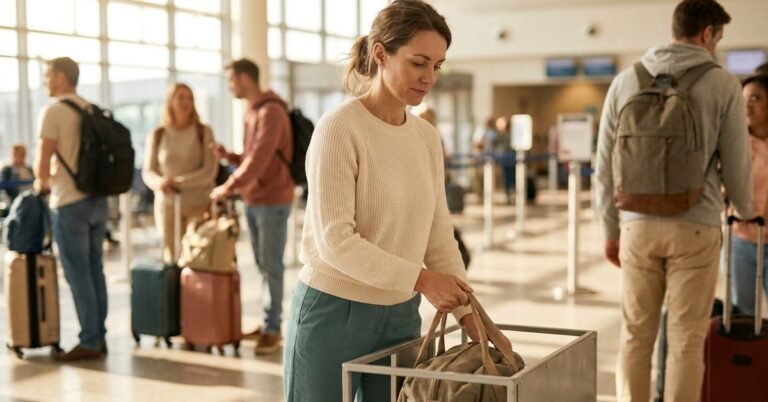
A lighter bag means both hands free, faster movement through a crowd, and no bulky suitcase to watch while you figure out directions, which matters more alone than in any group. What actually changes when no one else is around to help with luggage? Everything becomes your job alone, grabbing a second bag, watching your things while you use a bathroom, so every extra piece of luggage becomes one more thing a solo traveler has to manage without backup.
What If You Feel Too Old or Out of Place to Travel Light and Alone?
One woman in her 50s considering a solo budget trip to Bali kept asking herself the same question before booking: would she be too old and out of place in a hostel full of young backpackers, afraid she would not share their energy and end up left out. Is that fear a real reason to pack heavier and book differently? No, it is a reason to pick lodging that fits the trip, not to abandon traveling light itself, since the fear is about company, not about carrying less.
Pick One Bag Size and Build Backward From It
Choose your bag’s exact size before you choose a single item to put in it, since packing a pile of clothes first and hoping it fits is how overpacking starts every time. A fixed container forces every decision after that point, you stop asking “should I bring this” and start asking “what does this bag still have room for.”
What Size Actually Counts as “Light”?
Most airlines cap a carry-on at roughly 22 x 14 x 9 inches, which lands in the 35 to 45 liter range depending on the bag’s shape. Does a bigger “personal item” bag under the seat solve the size problem? Only partly, since stuffing a personal item past its own limit just moves the overpacking problem to a second bag instead of solving it.
Build a 5-Day Capsule Wardrobe That Repeats Twice
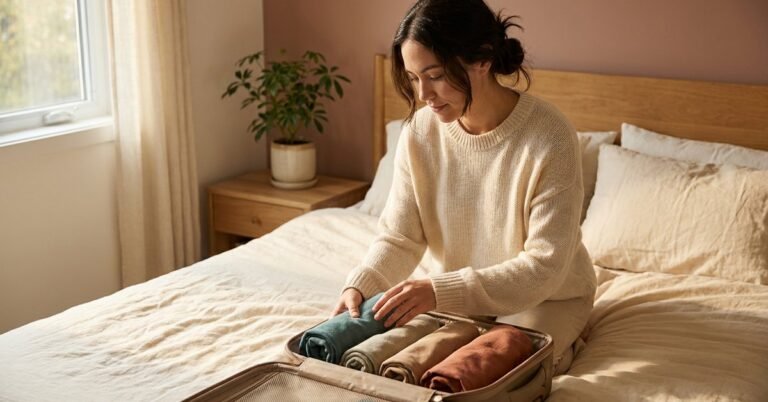
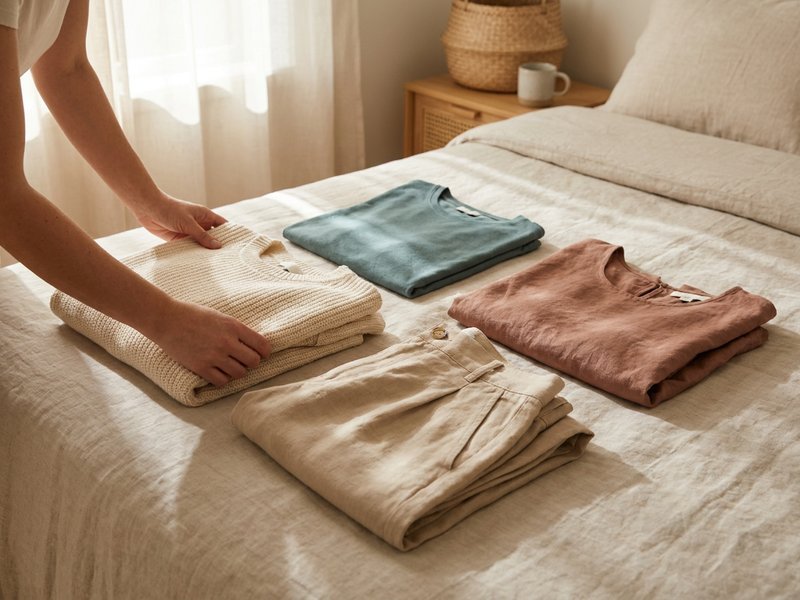
Pack enough mix-and-match pieces for 5 days, then plan to repeat that same capsule twice on a 10-day trip instead of packing a fresh outfit for every single day. Three bottoms and five tops that all coordinate with each other give you roughly 15 outfit combinations from 8 total pieces, which is more variety than most solo travelers actually use in a week.
Does wearing the same core pieces twice on a trip actually show? Almost never, since a change of accessory, a different layering piece, or simply a different city in the photos makes a repeated outfit read as a new one to everyone except you.
Pack the “Just in Case” Items Last, Not First
Finish your real packing list completely, zip the bag, and only then decide if there is still room for a “just in case” item, since packing those items first is what quietly fills a bag before the essentials even go in. A “just in case” rain jacket, a backup charger, a second pair of shoes, each one feels small alone, but packed first they compete with essentials for the same limited space.
Why does the order matter more than the item itself? Because an essential left out for space reasons becomes an actual problem on the trip, while a “just in case” item left out almost never does. Packing essentials first protects you from the wrong kind of shortage.
What a Light-Packing Trip Actually Costs
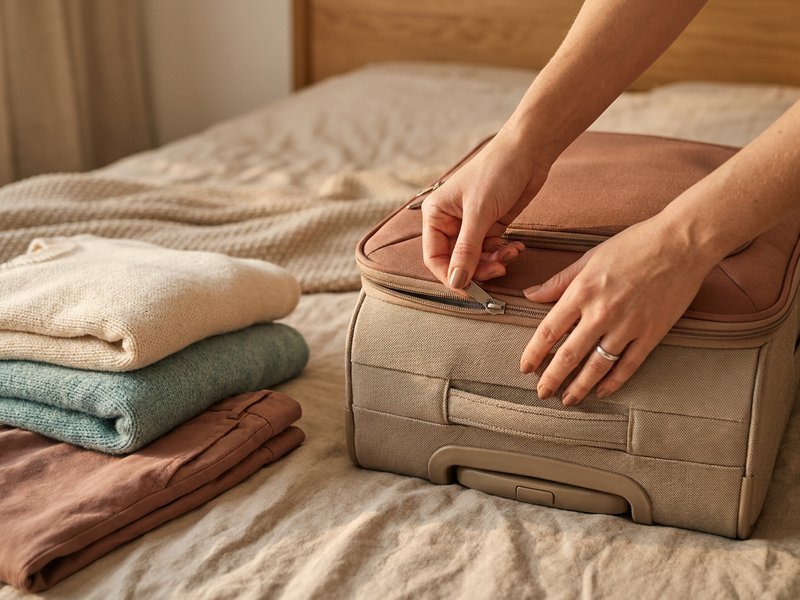
Traveling with one carry-on bag avoids checked-bag fees that run $35 to $65 each way on most airlines, money that adds up fast across a multi-stop solo trip. Does skipping those fees really matter over just one trip? On a single flight, maybe not; stacked across a 15-month, 19-country trip the way one traveler’s $20,000 budget did, the same logic that caught a few cheap drinks adding up every day is exactly what keeps small daily packing decisions from quietly costing real money.
The TSA’s 3-1-1 liquids rule caps carry-on toiletries at 3.4 ounces per container, worth checking before you pack a single bottle, since a full-size bottle confiscated at security costs you the item and the packing space both.
Is It Safe to Pack Light and Travel Completely Alone?
Yes, packing light makes solo travel safer, not riskier, because a smaller bag keeps your hands free and your attention on your surroundings instead of on managing luggage. The TSA’s “What Can I Bring?” tool is a free way to check a specific item before your trip, so security never becomes the moment you discover a mistake.
How to Recover When You Already Overpacked
If the bag is already packed and over your limit, remove the heaviest single item first, not five small ones, since one heavy mistake usually accounts for more excess weight than everything else combined. A second pair of shoes or a thick jacket is almost always the heaviest single item in an overpacked bag.
Checking a State Department travel advisory for your destination before you finish packing can also change what actually belongs in the bag, since a region’s current safety picture sometimes calls for one more layer of caution than a packing list alone accounts for.

Let the System Pay Off on the Trip, Not Just at the Airport
A woman who travels solo out of DC spent three weeks in Central America, with the entire trip, flights included, coming to $1,500 total, and felt completely safe the whole time even in a country that had recently seen political turmoil. Packing light was not the whole reason that trip worked, but it was one less thing to manage on a budget that left no room for checked-bag fees or an extra suitcase to watch.
For the system that makes a single carry-on last longer than a 10-day trip, this site’s guide to packing a carry-on for 2 weeks without checking a bag builds directly on the capsule wardrobe above, and how to use packing cubes to stay organized on every trip is the tool that keeps that capsule from turning into a mess mid-trip. For a full packing roundup to start from, this site’s 10 minimalist packing ideas to travel with just a carry-on fits directly into the system above. Watch for this site’s roundup of the best carry-on luggage for women if you still need to choose a bag, or start from this site’s carry-on packing hub for the full list of guides.
Frequently Asked Questions
What does it actually mean to pack light for a solo trip?
It means fitting everything into one carry-on in the 35 to 45 liter range, packed to about 15 pounds, so you never check a bag or juggle more luggage than you can carry alone through a station or airport.
How do I start learning how to pack light with no experience?
Pick your bag’s exact size first, then build a 5-day capsule wardrobe backward from that limit instead of packing a fresh outfit for every day. Finish your essentials list completely before you add a single “just in case” item.
Is it actually safer to pack light when traveling alone as a woman?
Yes, a lighter bag keeps both hands free and your attention on your surroundings instead of on managing luggage, which matters more when no one else is there to help watch your things. 84% of solo travelers already identify as female, so this is a well-traveled path, not an unusual one.
How do I pack light for a solo trip over 50?
The same capsule-wardrobe system applies at any age; the real adjustment is usually lodging, not luggage. Worrying about fitting in at a hostel is a reason to pick a guesthouse or boutique stay instead, not a reason to pack heavier or skip a solo trip entirely.