This post contains no affiliate links today. If that ever changes, I will say so right here, at the top of the post.
Carry on rules trip up more travelers at the gate than a badly packed bag ever does. One single mom waited until her son was 8 before taking him on a real trip at all, not because she could not afford it, but because she wanted every detail planned out first, nothing left to guess at the airport. That same instinct, know the rule before you are standing there needing it, is exactly what carry-on travel rewards and what most beginners skip.
The short version: Carry-on rules come down to three numbers: one quart bag of liquids under 3.4 ounces each, a bag that fits roughly 22 x 14 x 9 inches, and a weight limit that varies by airline, especially budget carriers. Confirm your specific airline’s size chart and fees before packing, not after you reach the gate.

Save this for later
You will want this again. Pin it to your planning board so it is one tap away when you need it.
Pin it for laterCarry On Rules Start With the 3-1-1 Liquid Limit
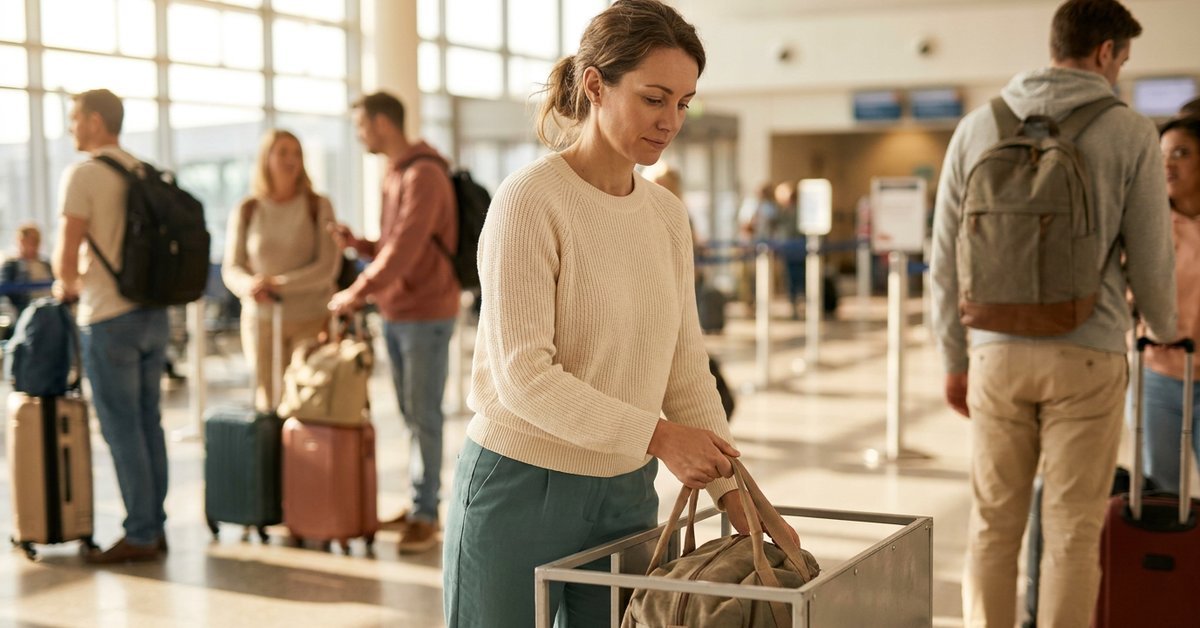
Every liquid, gel, or aerosol in your carry-on must sit in a container of 3.4 ounces or less, with all containers together fitting inside one quart-size clear bag. This is the TSA’s official 3-1-1 rule, and it applies to anything pourable: shampoo, sunscreen, peanut butter, and yes, that travel candle someone always forgets about. One quart bag per passenger, full stop, no exceptions for a slightly bigger bottle that is “almost empty.”
What Happens If You Forget and Pack a Full-Size Bottle?
It gets pulled at the checkpoint and thrown out, every time, no quiet exceptions. TSA does not mail it back or hold it at a desk for pickup later. The fix costs nothing but a few minutes at home: decant anything over 3.4 ounces into a small travel bottle before you leave, and keep the quart bag somewhere you can pull it out fast at screening, since a bag buried at the bottom of your carry-on slows down the whole line behind you.
Is there any way around the quart-bag limit for medication? Yes. Prescription liquids, baby formula, and breast milk are allowed in reasonable quantities over 3.4 ounces, just declare them separately at screening so an officer can test them instead of tossing them.
Carry-On Size Limits Are Not the Same From One Airline to the Next
A carry-on that fits on one airline can get gate-checked on another, since there is no single universal size, only an unofficial industry norm of about 22 x 14 x 9 inches. Major US carriers mostly cluster around that number, but budget airlines run tighter, and international carriers sometimes shave an inch or two off every dimension. A bag that has flown free for years can suddenly fail a sizer at the gate the one time it matters.
One traveler planning a trip to Cusco built her whole prep process around removing guesswork before it could cost her: she pre-booked every hostel and arranged airport pickups ahead of time, rather than trusting she would sort it out once she landed. A carry-on bag deserves the same treatment. Measure it against your specific airline’s published chart before packing, not after you are already standing in the boarding line.
Budget Airlines Can Make a “Free” Carry-On Cost More Than You Think
A rock-bottom base fare can hide carry-on, seat selection, and checked-bag charges that full-service airlines simply bundle in for free. One traveler weighing airline options on a trip-planning forum pushed back hard on the idea that the lowest sticker price is automatically the cheapest flight, pointing to Frontier Airlines as the textbook example: the fare looks cheap until the carry-on bag, the seat, and the first checked bag all get added on separately, and the total often lands above what a full-service airline would have charged for the same trip, on seats the traveler called tight enough to be a running joke.
Does that mean budget airlines are never worth it? Not always, but the math only works if you check the airline’s actual baggage fee page before comparing prices, not after you have already clicked purchase on the lowest fare you saw.

What You Genuinely Cannot Bring in a Carry-On
Sharp objects with a blade longer than about 2.36 inches, most sporting equipment with a swing or a point, and any flammable item stay out of a carry-on entirely, not just restricted in size. Pocketknives, box cutters, baseball bats, and full-size tools fall into this category, along with anything that could pass as a weapon at a glance. Should any of that go in a checked bag instead? Some of it can, but spare lithium batteries and portable chargers cannot go in checked luggage at all and must stay in the cabin, since a battery fire is far easier to catch and stop there than in the belly of the plane.
Can You Bring Food Through Security?
Solid food, yes, almost without limit. Sandwiches, snack bars, dry cereal, and fruit all clear security without issue. The 3-1-1 rule only catches food that counts as a liquid or gel by TSA’s definition, which is why a jar of peanut butter or a tub of yogurt gets pulled the same as a bottle of shampoo would.
Electronics Have Their Own Carry-On Rule, Separate From Everything Else
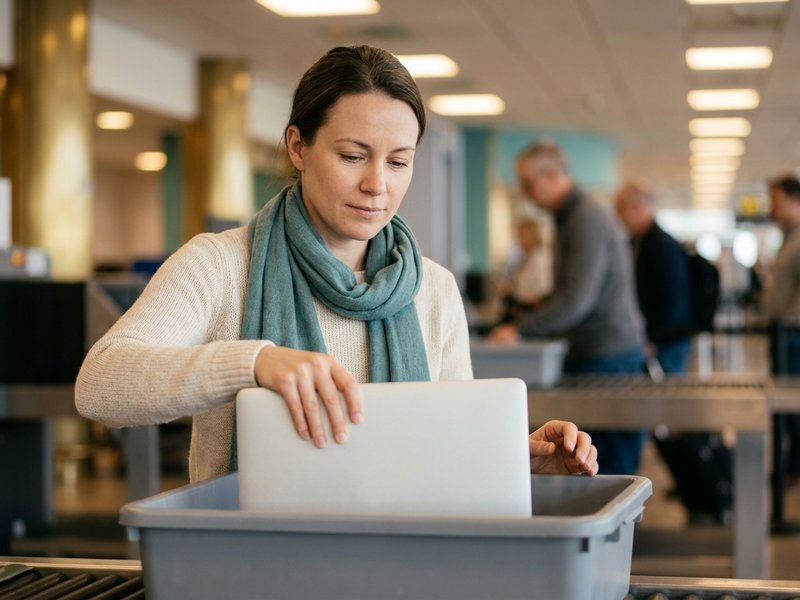
Laptops and large tablets usually need to come out of your bag and go through screening on their own, in a separate bin. Does that rule apply to every US airport now? Not yet. A growing number of airports use CT scanners that let laptops stay in the bag, but since not every checkpoint has that technology yet, pulling it out by default avoids the awkward moment of being waved back to redo your bin.
Why does this rule exist at all if some checkpoints do not need it anymore? Older X-ray machines cannot see through a laptop’s dense battery and circuitry clearly enough to rule out anything hidden behind it, so until every checkpoint is upgraded, the separate-bin rule stays the safe default nationwide.
Reaching for a Clear Answer Before the Trip Beats Guessing at the Gate
Solo travel without a partner to split the mental load means the person packing the bag is also the one who has to know the rule, since there is no one else to catch the mistake. One frequent solo traveler, 44 and still carving out trips alone between caring for aging parents and a job market that has not made things easy, put it simply: she keeps telling herself the uncertainty is exactly why she needs to go now, while she still can, and that means not leaving the one controllable part, what goes in the bag, up to chance at the airport.
A Carry-On-Only Trip Changes How Much Guessing You Have to Do
Skipping a checked bag means skipping an entire category of airport uncertainty, lost luggage, baggage claim waits, and an extra fee, but it raises the stakes on getting the carry-on rules right the first time. One traveler who had spent years touring in large groups of 30 to 40 people finally admitted those trips left her flat, since most of the group wanted to stay at the resort while she wanted to see the city. Switching to solo travel meant switching to carry-on-only by necessity, since there was no one else to help haul a second bag, and she called every trip since a genuine improvement.
Does traveling carry-on-only always save time? Usually, yes. Skipping the checked-bag counter and the baggage carousel on both ends of a trip can save close to an hour total, time that matters most on a short solo trip with a tight schedule.
What Should You Actually Do Before Your Next Trip?
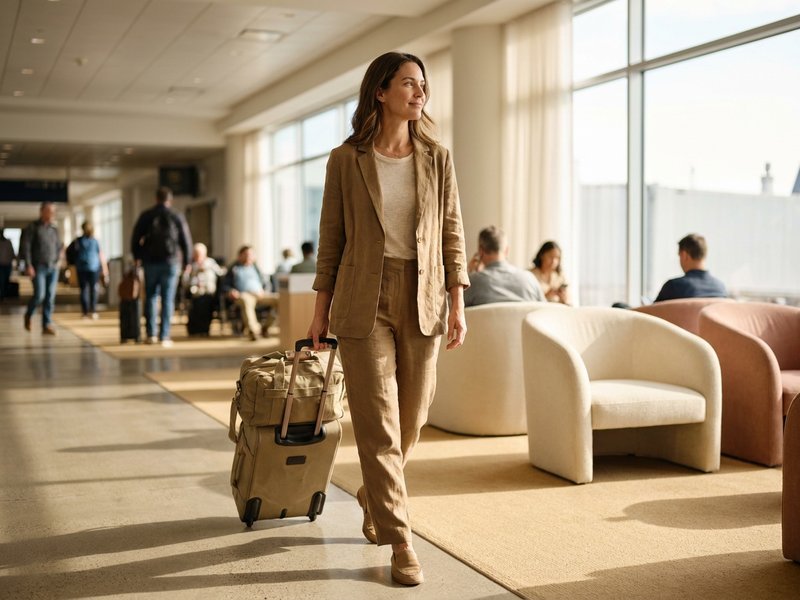
Pull up your specific airline’s carry-on size and fee page tonight, pack your liquids into one quart bag under 3.4 ounces each, and keep spare batteries in the cabin, not checked. Carry on rules only feel complicated the first time you look them up cold at the gate. Checked once, ahead of time, they take five minutes and remove the single biggest source of airport stress on a trip you are already doing alone.
None of this requires memorizing a rulebook. It just requires checking once, before you pack, instead of finding out the hard way at the checkpoint. For the bag itself, this site’s guide to the best carry-on luggage for women is worth reading next.
Found this helpful? Pin this guide so you can come back to it anytime.
Frequently Asked Questions
What is the 3-1-1 rule for carry-on liquids?
Every liquid, gel, or aerosol must sit in a container of 3.4 ounces or less, with all containers together fitting inside one quart-size clear bag, one bag per passenger. Prescription liquids and baby formula are allowed in larger amounts if declared separately at screening.
Is the carry-on size limit the same on every airline?
No. Most US carriers cluster around 22 x 14 x 9 inches, but budget airlines often run tighter and international carriers sometimes shave an inch or two off every dimension. Check your specific airline’s chart before packing, since a bag that flies free on one airline can get gate-checked on another.
Can you bring spare phone chargers and batteries in a carry-on?
Yes, and you actually have to. Spare lithium batteries and portable chargers are banned from checked luggage and must travel in the cabin, since a battery fire is far easier to catch and stop there than in the belly of the plane.
Do laptops need to come out of your bag at security?
Usually, yes, into a separate bin on their own. A growing number of airports now use CT scanners that let laptops stay packed, but since not every checkpoint has the technology yet, pulling your laptop out by default avoids being waved back to redo your bin.